

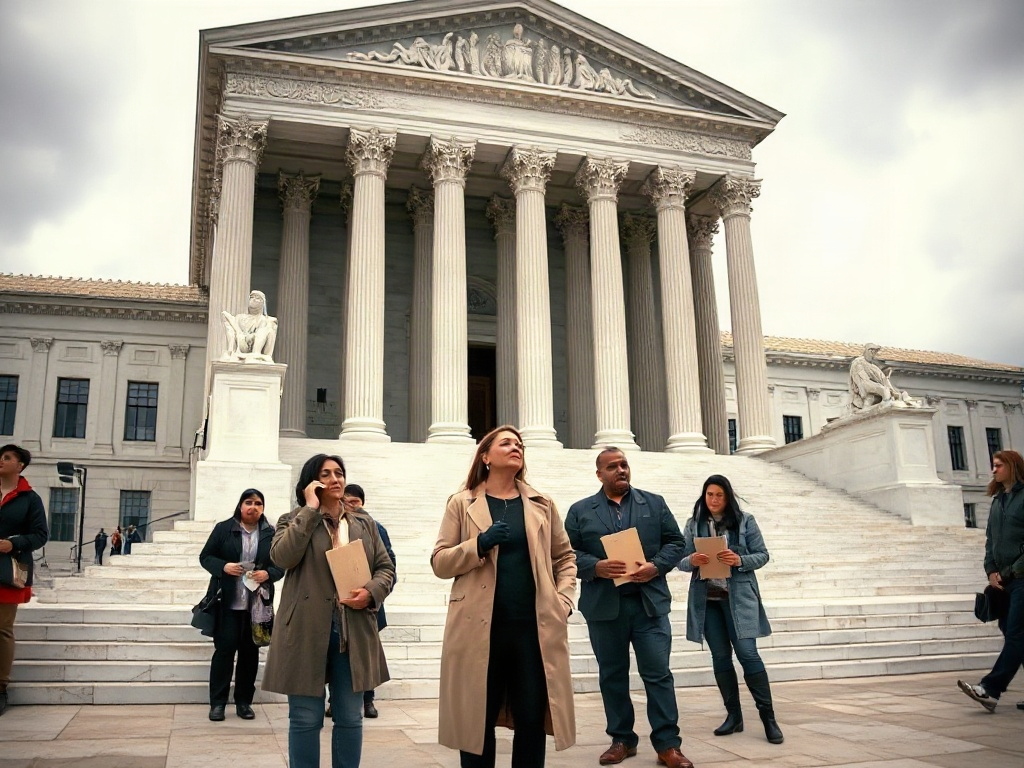

Three children sexually abused and filmed by their father have petitioned the U.S. Supreme Court to overturn an Arizona Supreme Court ruling that gave religious groups authority over when to report child abuse. Attorney John Trebon, representing the victims, argued the ruling violates the First Amendment’s Establishment Clause and misinterprets state law designating clergy as mandatory reporters outside confession.
The petition, filed with the U.S. Supreme Court, argues that the Arizona Supreme Court’s interpretation of state law violates the First Amendment’s Establishment Clause by effectively delegating government authority to a religious institution. Trebon said the lower court’s ruling “misinterprets the clear meaning of the statute” and improperly grants the Church of Jesus Christ of Latter-day Saints, commonly known as the Mormon church, the discretion to determine when mandatory reporting laws apply.
The case stems from the abuse of three children by their father, who was later convicted and sentenced to prison.
The children, whose identities have not been disclosed, were sexually abused and filmed by their father, according to court records. The abuse was reported to church leaders, who did not notify authorities, according to the petition.
The Arizona Supreme Court ruled earlier this year that religious groups can decide when to report admissions of child abuse, even though state law designates clergy as mandatory reporters in non-confessional settings. The unanimous ruling held that the clergy-penitent privilege extends to situations where a person confesses abuse to a religious leader, even if the confession occurs outside a formal confessional booth.
Trebon, who has represented the victims throughout the legal proceedings, said the ruling gives the church authority that the legislature did not intend. “We believe that the Arizona Supreme Court got that wrong, that there is no compulsion to alter the clear meaning of the statute to give that kind of authority to the Church,” Trebon said.
The petition asks the nation’s highest court to review the case and determine whether the Arizona ruling conflicts with federal constitutional protections. The Establishment Clause, which prohibits the government from establishing or favoring a religion, is central to the victims’ argument, according to the petition.
The case has drawn attention to the intersection of religious liberty and child welfare laws. Arizona is one of several states that require clergy to report suspected child abuse, but the scope of the clergy-penitent privilege has been the subject of legal disputes across the country.
The father in the case was arrested after law enforcement discovered the videos he had made of the abuse. He pleaded guilty to multiple counts of sexual conduct with a minor and was sentenced to decades in prison, according to court records. The children were removed from the home and placed in the care of relatives.
The Church of Jesus Christ of Latter-day Saints has not filed a response to the petition, and church officials have not commented publicly on the case. The church has previously stated that its leaders are required to report abuse to civil authorities when required by law, but it also maintains that confidential confessions are protected by religious privilege.
The U.S. Supreme Court receives thousands of petitions each year but hears arguments in only a small fraction of cases. Trebon acknowledged that the decision to take up the case is at the discretion of the Court. “Whether or not the case moves forward is up to the U.S. Supreme Court,” he said.
If the Court declines to hear the case, the Arizona Supreme Court’s ruling will stand, and the children’s legal options will be exhausted. The petition is one of several recent challenges to state laws governing clergy reporting requirements, as courts and legislatures grapple with balancing religious freedom and child protection.
The case is titled *Doe v. The Church of Jesus Christ of Latter-day Saints* and was filed in the U.S. Supreme Court in October. The Court is expected to decide whether to grant certiorari, or review the case, in the coming months.


Comments are closed.