

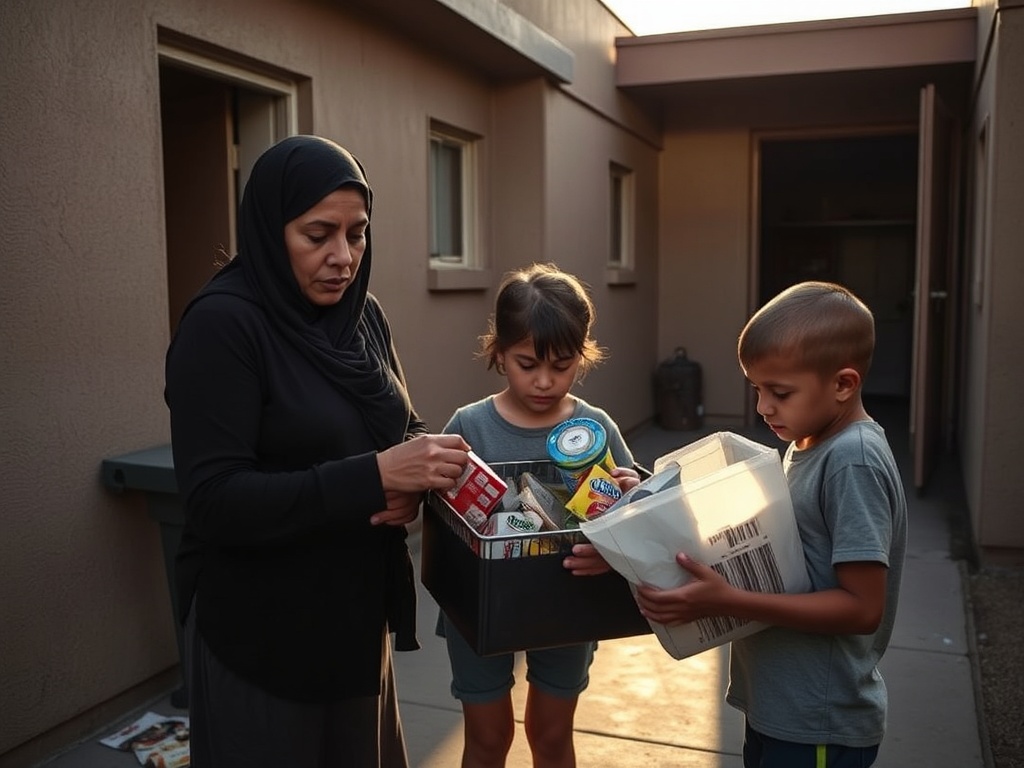
Over 400,000 Arizonans lose SNAP food stamp benefits under Trump legislation, marking nearly 47% decline statewide with largest national drop since July

More than 400,000 Arizonans lost SNAP food stamp benefits between July and February, marking a nearly 47% decline in statewide participation, according to the Arizona Department of Economic Security. The reduction followed the enactment of President Trump’s One Big Beautiful Bill Act in July 2025, which imposed stricter eligibility rules and removed benefits for non-citizens, officials said.
The decline in Arizona’s Supplemental Nutrition Assistance Program (SNAP) participation represents the largest national drop since July, with the Arizona Department of Economic Security (DES) reporting more than 400,000 residents lost benefits between July 2025 and February 2026. This reduction amounts to nearly a 47% decrease in statewide SNAP enrollment, officials said, far exceeding the next largest state decline of under 16% in Florida, according to data from the Center on Budget and Policy Priorities.
The Arizona Department of Economic Security (DES) reporting more than 400,000 residents lost benefits between July 2025 and February 2026.
The sharp decrease followed the enactment of President Trump’s One Big Beautiful Bill Act (OBBBA), signed into law on July 4, 2025. The legislation imposed stricter eligibility requirements for SNAP recipients, including the removal of benefits for non-citizens such as refugees, asylees, trafficking victims, and humanitarian parolees. The changes affected new applications and recertifications immediately after a 120-day grace period ended on November 1, 2025, according to federal and state officials.
Among those impacted are approximately 180,000 children, according to DES figures, with alternative reports citing losses ranging from 375,000 to nearly 400,000 individuals statewide, including 160,000 children, over the six-month period. The affected populations include refugees and asylum seekers from countries such as Afghanistan, Somalia, Syria, and the Democratic Republic of Congo, many of whom had previously been exempt from the five-year waiting period for SNAP eligibility. These groups now face immediate ineligibility under the new law, sources confirmed.
In addition to citizenship restrictions, the OBBBA introduced more stringent work requirements for adult recipients, including veterans and former foster care youth, officials said. The program now mandates increased employment or job training participation to maintain eligibility, resulting in many recipients either leaving or being removed from the SNAP rolls. DES reported that approximately 380,000 Arizonans have been removed or have left the program due to these enhanced requirements since the law’s passage.
The implementation of these changes has occurred amid significant operational challenges at DES. The agency laid off 500 employees last summer, including 160 eligibility specialists, representing a 40% decline in staffing since July 2024, according to spokesperson Brett Bezio. DES also cited reliance on outdated technology from the 1980s as a factor slowing application processing. In response, Governor Katie Hobbs allocated $7.5 million in December 2025 to hire over 100 additional workers and increase overtime capacity to address the backlog in SNAP case processing.
Despite the steep decline in participation, DES officials emphasized efforts to reduce the program’s error rate, which currently stands at 8.8%, below the national average but above the federally mandated 6% threshold. Failure to meet this target could result in penalties totaling $195.4 million, Bezio said.
The reduction in SNAP benefits has had broader economic and social impacts across Arizona. Local food banks report empty shelves and increased demand as families face difficult choices between paying rent and purchasing food, sources at community organizations confirmed. Mayor Kate Gallego described the situation as an “all-hands-on-deck” challenge, urging increased donations and volunteer support to meet rising needs.
Economic analysts from the Arizona Center for Economic Progress noted that the loss of SNAP benefits affects not only individual households but also grocery stores, food producers, and communities statewide. The reduction in consumer purchasing power has implications for local economies, particularly in areas with high concentrations of refugee resettlement.
The SNAP director at the Food Research and Action Center highlighted the program’s role as a critical lifeline, especially for children, noting that the recent policy changes have disrupted access for many vulnerable populations. Community advocates also pointed to the loss of SNAP benefits as a barrier to integration efforts, including English as a Second Language (ESL) classes and job training programs for refugees and immigrants.
Media reports from 12 News and KJZZ in late February 2026 corroborated the scale of the impact, with coverage highlighting the tough circumstances faced by nearly 400,000 Arizonans who have lost food assistance in recent months.
The One Big Beautiful Bill Act’s removal of SNAP eligibility for non-citizens and the imposition of stricter work requirements represent a significant shift in federal policy, enforced through the July 2025 congressional funding plan. DES continues to administer these changes while managing resource constraints and increased demand for services. State officials expect SNAP participation to stabilize in the coming months as the program adjusts to the new requirements and staffing levels improve.


Comments are closed.