

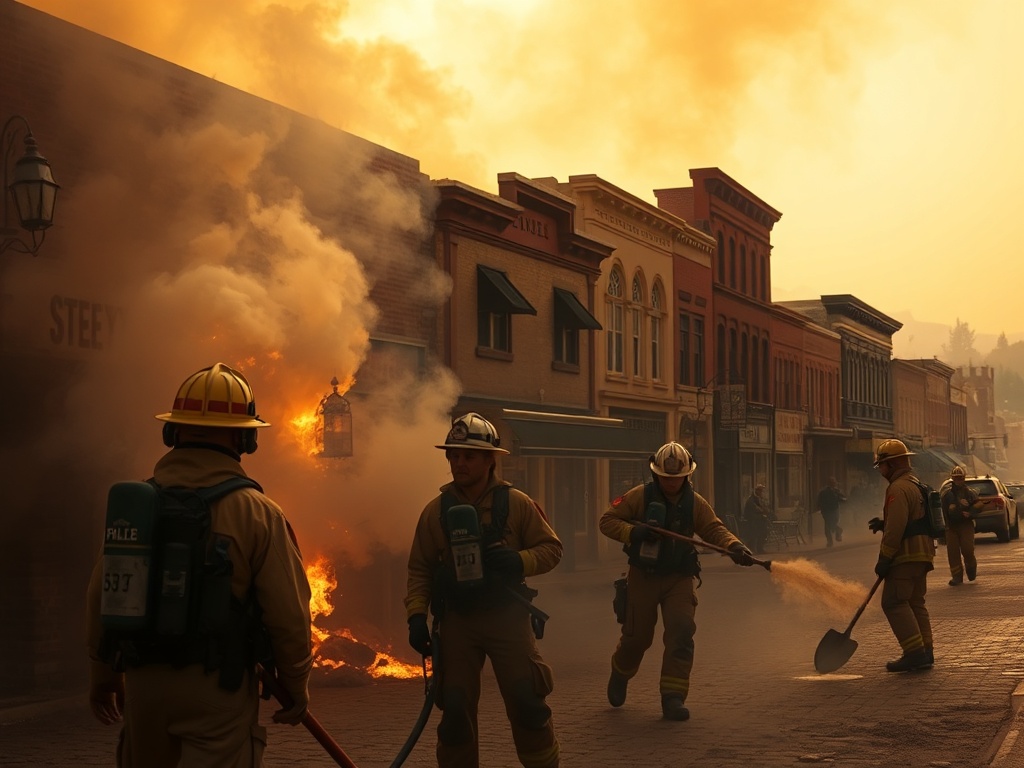

A wildfire threatened Prescott’s historic downtown area Tuesday, officials said, as crews worked to contain flames near wildland vegetation on the city’s southern edge. The elevated risk stems from Prescott’s proximity to fire-prone areas and dry conditions intensified by climate change, according to federal data showing nearly all buildings in the city face significant wildfire exposure.
The wildfire threat to Prescott’s historic downtown comes amid data showing nearly 100% of buildings citywide face very high wildfire risk, officials said. The elevated danger is largely due to Prescott’s proximity to wildland vegetation, particularly on the city’s southern edge, where dry conditions have been intensified by climate change, according to the U.S. Forest Service and federal wildfire risk assessments.
According to federal wildfire exposure data, all 61 census tracts in Prescott have more than half of their buildings classified as having significant fire risk, with one in four buildings directly in the line of fire.
While the Granite Mountain Hotshots, a well-known wildfire firefighting crew historically linked to the 2013 Yarnell Hill Fire near Prescott, have not been deployed to recent wildfire incidents in the area, local firefighting efforts remain active. The Central Arizona Fire and Medical Authority (CAFMA) and the Prescott Fire Department are responsible for responding to wildfire threats in the region, with no current reports of Hotshots involvement, officials confirmed. The Prescott Fire Department continues to promote wildfire risk management strategies, including the Fire-Adapted Communities (FAC) program, which encourages local collaboration and defensible space creation around homes.
Recent wildfire incidents in the Prescott area underscore the ongoing risks. On March 11, 2026, a structure fire was reported at 4:12 p.m. in the 7800 block of East Manley Drive in Prescott Valley. Investigators determined the fire started from burning weeds on a no-burn day and spread to surrounding bushes and the attic of a home, with wind conditions fueling the fire’s expansion. Crews from CAFMA and the Prescott Fire Department contained the fire to the building of origin, successfully protecting neighboring properties and recovering valuables, according to fire officials.
Historical wildfire events also demonstrate the community’s vulnerability. The 2002 Indian Fire destroyed three homes in the Cathedral Pines community near southern Prescott, an area adjacent to wildland vegetation that continues to face elevated fire risk. Additionally, a wildfire in July 2015 impacted 385 buildings in Prescott, records show. Between 1984 and 2021, two major wildfires were recorded near Prescott, further highlighting the city’s exposure to wildfire hazards.
Federal wildfire risk data ranks Arizona communities among the highest in the nation, with Prescott’s risk levels exceeding those of 75% of other U.S. communities. Insurance companies have responded by declining coverage for some properties due to the high wildfire risks, sources confirmed. Joe Day, a local home property inspector, noted that the number of property inspections has doubled this year compared to all of last year, reflecting increased concern and efforts to mitigate risk.
To address wildfire threats, Prescott’s Fire Department and Recreation Services Department have implemented proactive fuels management programs to reduce combustible vegetation near homes and public spaces. The FAC strategy includes seven steps, starting with creating a collaborative local group involving all stakeholders and identifying community risks through a Community Wildfire Protection Plan (CWPP). Fuels Management Crews educate residents and assist with creating defensible space—modified vegetation areas designed to slow or stop wildfire spread between wildland and structures. Homeowners associations and firefighters receive training as firewise inspectors to support neighborhood preparedness, according to Prescott Fire Department officials.
Climate change contributes to the heightened wildfire risk by creating hotter and drier conditions that facilitate fire ignition and spread. Federal projections indicate that the number of very high fire weather days in Prescott is expected to increase through 2050, compounding the challenge of protecting the city’s historic downtown and surrounding neighborhoods. Prescott National Forest officials direct the public to InciWeb, a comprehensive incident information system, for updates on current wildfire activity, though no large-scale wildfires threatening downtown Prescott have been reported recently.
Prescott’s wildfire risk management efforts continue amid these challenges, with ongoing collaboration between local fire agencies, community groups, and residents aimed at reducing vulnerabilities and enhancing resilience against future wildfire events.


Comments are closed.