

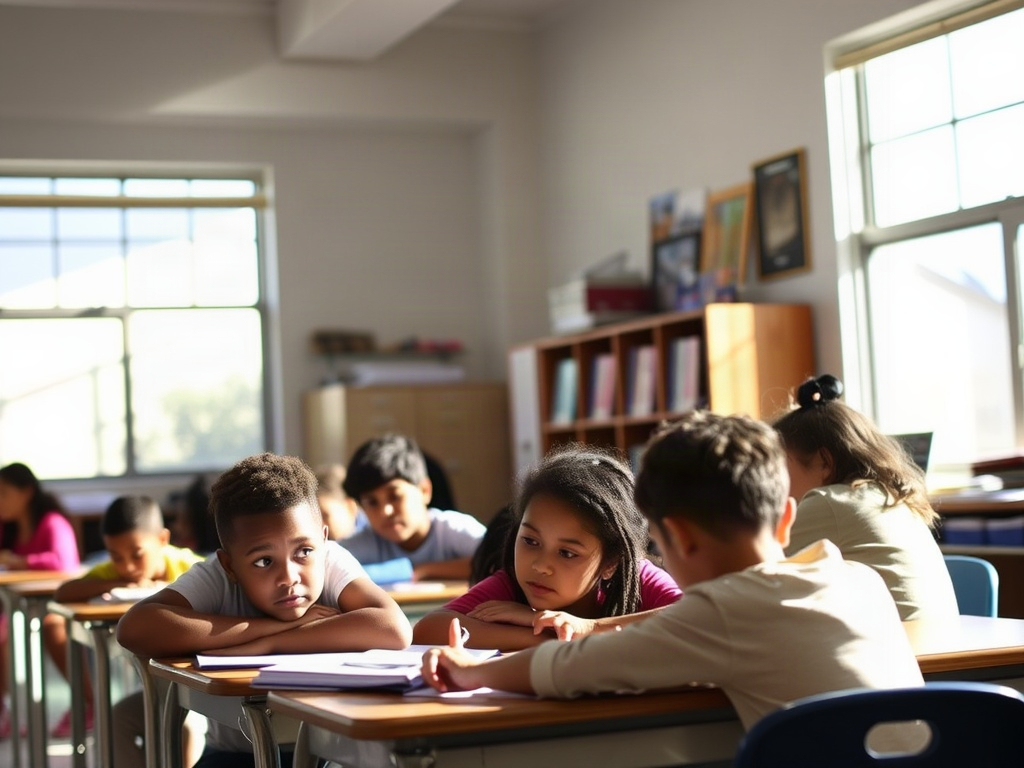
Southern Arizona school districts weigh plan to send special education students to Tucson Unified programs to ease capacity strains in surrounding districts

Southern Arizona school districts in 2026 considered sending special education students to Tucson Unified School District programs while keeping them enrolled in their home districts. Officials said the plan aimed to ease capacity strains in surrounding districts lacking specialized classrooms and staff by utilizing open seats in TUSD’s existing programs for blind and visually impaired students on a tuition basis.
The Tucson Unified School District (TUSD) Governing Board approved a special education tuition structure and classroom allocation plan in 2026 that allows surrounding Southern Arizona districts to place special education students in TUSD programs while maintaining the students’ enrollment benefits in their home districts, officials said. The board’s May 12 vote, which passed 4–1, followed an agreement with the Arizona State School for the Deaf and Blind (ASDB) to open classrooms at Morgan Maxwell K‑8 and Pueblo High School for visually impaired students displaced by ASDB’s closure of its Tucson campus and relocation of deaf services to Oro Valley, according to district records and media reports.
TUSD’s senior director of exceptional education, Sabrina Salmon, explained that the district has capacity in its specialized programs for blind and visually impaired students, with a cap of 12 students per program.
As of late August and early September 2026, Morgan Maxwell had four enrolled students with one pending, while Pueblo High had three enrolled, leaving seven open seats available for either additional TUSD students or tuition-paying students from neighboring districts. Salmon said districts interested in placing students would pay tuition to access these seats, creating a regionalized placement model that leverages TUSD’s existing infrastructure.
Additional TUSD campuses with available capacity for special education students include Booth-Fickett Math/Science Magnet School and Harold Steele Elementary School, each with 24 open seats, and Mary Meredith K‑12, which has 10 open seats after board approval of the new tuition arrangement. District financial reports show that TUSD serves approximately 42,000 students across 88 schools, with enrollment figures often below capacity, indicating room to absorb additional special education placements.
The tuition-based placement model allows students to remain enrolled in their home districts, preserving benefits such as state accountability, transportation eligibility, and access to extracurricular activities, according to media coverage and district guidance. Placement decisions for higher-needs students, classified as service code/level C for self-contained classrooms, are made based on the student’s Individualized Education Program (IEP), classroom availability, and qualified teacher staffing, Salmon said. TUSD’s Exceptional Education guidance notes that such classrooms are not available at all campuses or in all specialty areas, a constraint shared by surrounding districts experiencing capacity strains.
Local reporting has described surrounding Southern Arizona districts as facing significant capacity challenges in specialized self-contained classrooms, particularly for students requiring intensive support. Past data from the 2020 reopening period showed substantial numbers of high-needs special education students whose IEPs necessitated on-campus services, underscoring ongoing pressure on specialized capacity across the region.
The arrangement builds on TUSD’s existing external contract framework overseen by Salmon, who manages compliance, policy, budget oversight, and inter-district agreements. A recent restructuring of TUSD’s exceptional education leadership replaced five centrally based assistant director roles with one director and five school-based program specialists, positioning expertise closer to campuses. This model aims to expedite IEP resolution and compliance matters, a critical function when multiple districts’ students are served in TUSD programs under formal contracts.
TUSD’s Policy Code IHB on special education, adopted originally in 2008 and updated since, provides the legal framework for accommodating non-resident students through contracts while ensuring compliance with state and federal laws, including the Individuals with Disabilities Education Act (IDEA). The district’s exceptional education services already include provisions for non-district students, such as those parentally placed in private or parochial schools or homeschooled, indicating experience with cross-boundary service provision.
State-level data show TUSD as a major special education provider, with a reported count of 6,597 special education students ages 3–21 in recent statewide reports. This positions the district as a logical hub for Southern Arizona’s regional placement strategy. The tuition-based model effectively creates regional specialty hubs inside TUSD, where surrounding districts purchase access to high-needs programs they may not be able to staff or scale locally, while retaining students’ enrollment in their home districts for state reporting purposes.
The expansion of TUSD’s special education access for surrounding districts is part of a broader effort to address capacity strains and provide appropriate services for higher-needs students across Southern Arizona. The district continues to monitor enrollment, staffing, and program capacity annually to adjust placements and tuition arrangements accordingly.


Comments are closed.