

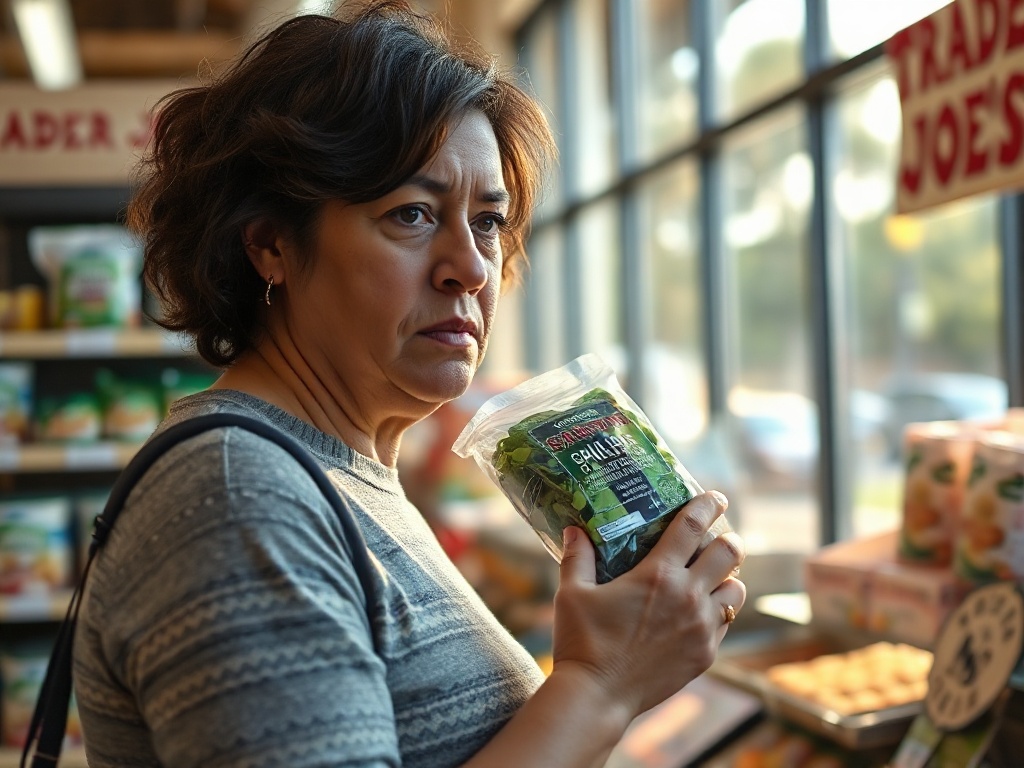
Trader Joe’s recalls packaged salads in Phoenix, Tucson and across Arizona over glass and plastic contamination fears

Trader Joe’s recalled several packaged salads sold in Phoenix, Tucson, and across Arizona on Tuesday due to concerns they might contain glass or hard plastic, officials said. The recall stemmed from production problems at suppliers that led to potential contamination in poultry-based salads and a chicken slaw product, prompting the company to advise customers not to eat the items and to discard or return them for a refund.
The recall involves several poultry-based salads, including Trader Joe’s White Meat Chicken Salad, Curried White Chicken Deli Salad, and Turkey Cranberry Apple Salad, all marked with the USDA inspection code “P-40299,” according to the company’s official recall notice. The affected products carry use-by dates ranging from November 10 to November 21 of the recall year. Customers who purchased these items in Arizona, specifically in Phoenix, Tucson, and other locations, were advised not to consume them and to either discard the products or return them to any Trader Joe’s store for a full refund, regardless of whether they retained a receipt, officials said.
The FSIS alert stated the potential contamination originated from the salad dressing supplier, which reported possible hard plastic fragments in the dressing.
In addition to the poultry salads, a separate recall and public health alert issued by the U.S. Department of Agriculture’s Food Safety and Inspection Service (FSIS) on March 10 covered Trader Joe’s Crunchy Slaw with Chicken, Crispy Noodles & Peanut Dressing. This product, sold in 12-ounce packages, bore use-by dates of March 9 through March 12, 2022, and carried the USDA establishment number “P-6247” inside the inspection mark. The agency classified the issue as a public health concern because ingestion of glass or hard plastic could cause injury to the mouth, teeth, or digestive tract, although no injuries or adverse reactions had been reported at the time of the alert.
Trader Joe’s and FSIS emphasized that only products with the specified inspection codes and use-by dates were affected. The retailer noted that similarly named products produced at other facilities with different USDA establishment numbers were not part of the recall. The company confirmed it had removed all impacted products from store shelves in Arizona and other affected states, which include California, Nevada, Utah, Colorado, Louisiana, New Mexico, Oklahoma, Texas, Idaho, Oregon, and Washington for the poultry salads. The Crunchy Slaw recall covered Arizona, California, Nevada, New Mexico, and Utah, according to FSIS records.
The contamination concerns stemmed from production problems at suppliers, with Trader Joe’s stating the poultry salads “may contain pieces of glass or hard plastic,” posing a physical hazard if consumed. The salad dressing supplier’s recall for the Crunchy Slaw was similarly triggered by potential hard plastic fragments found in the dressing. Both Trader Joe’s and FSIS urged consumers to check their refrigerators for the implicated products and to avoid eating them to prevent injury.
No confirmed illnesses or injuries had been reported in connection with either the poultry salads or the Crunchy Slaw at the time of the recalls, according to FSIS and company statements. The recalls follow a pattern of food safety interventions involving packaged salads sold at Trader Joe’s stores in Arizona and other western states. Previous recalls included those for E. coli O157:H7 contamination in ready-to-eat salads and wraps, as well as Listeria monocytogenes risks linked to ingredients such as sunflower seeds and cotija cheese in broccoli slaw and kale salad products.
Health officials have consistently highlighted that vulnerable populations—including children, older adults, pregnant people, and immunocompromised individuals—face increased risks from microbiological contaminants, while physical hazards such as glass or plastic pose acute risks to all consumers. Federal agencies including the Centers for Disease Control and Prevention and FSIS have advised consumers to carefully check product names, use-by dates, and USDA inspection codes to identify recalled items and to seek medical care if symptoms of infection occur.
The recalls were initiated after suppliers notified Trader Joe’s and regulatory agencies of the potential contamination. FSIS and the Food and Drug Administration typically issue public notices or recall announcements following such reports, prompting retailers to remove affected products from sale and inform consumers. Trader Joe’s has provided customer service contacts and maintained updated recall information on its website to assist shoppers with questions.
The latest recalls underscore ongoing challenges in ensuring the safety of ready-to-eat packaged salads distributed across multiple states, including Arizona. Authorities continue to monitor the situation and coordinate with suppliers and retailers to prevent contaminated products from reaching consumers.


Comments are closed.