

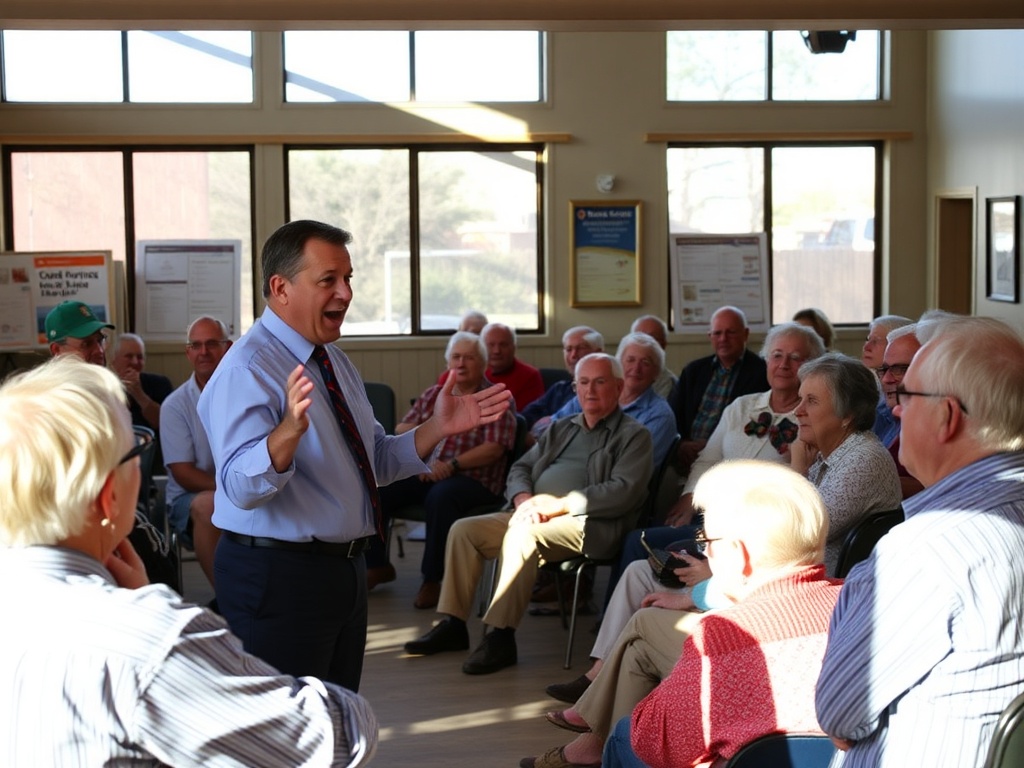

A Scottsdale GOP lawmaker introduced a bill Tuesday aimed at cutting property taxes for seniors in Maricopa County. The legislation seeks to expand the Senior Value Protection Program, which freezes the limited property value of eligible seniors’ primary residences, to provide greater tax relief amid rising property assessments, according to the lawmaker’s office.
The bill aims to expand the Senior Value Protection Program, commonly referred to as the “Senior Freeze,” which currently freezes the limited property value (LPV) of eligible seniors’ primary residences for three years, according to information from the Maricopa County Assessor’s Office. Eligibility for the program requires seniors to meet specific income, age, and residency criteria, with applications reviewed and approved by the Assessor’s Office. Applications must be submitted by September 1 of the current year, and beneficiaries must renew their eligibility every three years to maintain the LPV freeze.
The county has reduced property tax rates for the fourth consecutive year in the fiscal year 2025 budget, trimming the overall county budget by 11 percent, according to county budget documents.
While the program freezes the LPV, it does not freeze the actual property taxes. Taxes may still fluctuate based on rates set annually by the Maricopa County Board of Supervisors, officials said. These cuts aim to provide relief amid rising property values, though tax rates remain subject to change based on local government decisions.
Senate Bill SB1224, enacted on September 26, 2025, outlines circumstances under which seniors lose eligibility and the LPV must be recalculated. Triggers for losing protection include changes in ownership, the property no longer being the primary residence, or certain property modifications such as splits, mergers, or value changes exceeding 15 percent due to construction or destruction. If eligibility is lost, the LPV is recalculated using a Rule B method to align with comparable non-protected properties, according to Arizona Revised Statutes § 42-13302. Failure to renew the application also results in automatic loss of the LPV freeze.
The bill’s introduction comes amid broader Republican efforts to deliver significant tax relief in Arizona. On April 27, 2026, Arizona Republicans advanced a $1.45 billion tax relief package, described by Senate President Warren Petersen as one of the largest in state history. The package includes eliminating state taxes on tips and overtime pay, strengthening retirement tax relief for seniors, and increasing dependent tax relief for parents. The proposal, which spends $800 million less than Governor Katie Hobbs’ January plan, is reported to have sufficient support to pass both legislative chambers.
Governor Hobbs has expressed support for middle-class tax cuts but opposed the Republican plan’s elimination of the $6,000 senior tax deduction, citing potential impacts on working seniors, according to statements released by her office. Hobbs’ January 2026 proposal focused on broader middle-class relief and used different revenue projections than the Republican plan, which aligns state tax law with former President Donald Trump’s tax cuts without requiring 2025 tax refiling.
Efforts to curb rising property tax collections have faced challenges in the state Senate. A recent Republican-backed bill aimed at limiting property tax collections was voted down, with critics warning it would reduce revenue for schools, cities, and counties. Some Republican leaders joined Democrats in opposing the measure, according to legislative records.
The Republican budget proposal also includes significant spending cuts to balance tax relief. It eliminates nearly $100 million allocated for economic development projects, including $19 million in diverted state sales taxes for Tucson’s Rio Nuevo project and ends the Arizona Commerce Authority Compete Fund, saving $4 million but draining $63 million from its account. The budget, unveiled on April 27, 2026, prioritizes funding for core services such as education and public safety without raising taxes.
The Senior Value Protection Program, established to assist seniors facing rising property assessments, continues to be a focal point for lawmakers addressing tax relief. The program’s application deadline and renewal requirements underscore the importance of timely participation for eligible seniors in Maricopa County. The legislature’s ongoing debates and budget decisions will shape the extent of property tax relief available to seniors and other taxpayers in the coming years.


Comments are closed.