


The Arizona Legislature passed a bill cutting SNAP benefits for more than 450,000 residents, including nearly 200,000 children, since July 2025. Officials said the reductions were made to comply with federal legislation expanding work requirements and eliminating exemptions under President Donald Trump’s One Big Beautiful Bill Act.
Nearly 200,000 children, representing about one in three children previously receiving SNAP benefits, were among those cut from the program as of March 2026. The reductions reflect Arizona’s efforts to comply with federal mandates under the One Big Beautiful Bill Act (H.R. 1), legislation signed into law during the Trump administration that expanded work requirements and eliminated exemptions for groups such as homeless individuals and youth aging out of foster care.
Since July 2025, more than 450,000 Arizonans have been removed from the Supplemental Nutrition Assistance Program, the largest decline in the nation, according to data from the Arizona Department of Economic Security (DES) and the Arizona Center for Economic Progress.
The federal changes, which went into effect in July 2025, required states to implement stricter work verification procedures and remove certain exemptions, with a 120-day grace period ending November 1, 2025, for compliance. Arizona exceeded this timeline and removed more participants than any other state, accounting for nearly 47% of its total SNAP recipients, according to reports from the Center on Budget and Policy Priorities. DES officials said the agency faced unprecedented administrative challenges and noted that the federal budget bill imposed more program changes than seen in decades. New application requirements and verification processes have made it significantly tougher for many residents to prove eligibility, leading to delays of up to 30 days before benefits are issued.
The policy changes also shifted a larger share of program costs onto states, increasing the administrative burden on Arizona’s social services. DES officials cited the need to reduce the state’s payment error rate to avoid fines potentially totaling hundreds of millions of dollars. However, state agency representatives also attributed the increased bureaucracy and implementation pressure to the Trump administration’s policies. Refugees and asylees without lawful permanent resident status were among those rendered ineligible, further reducing the number of beneficiaries. These changes affected both new applicants and those undergoing recertification.
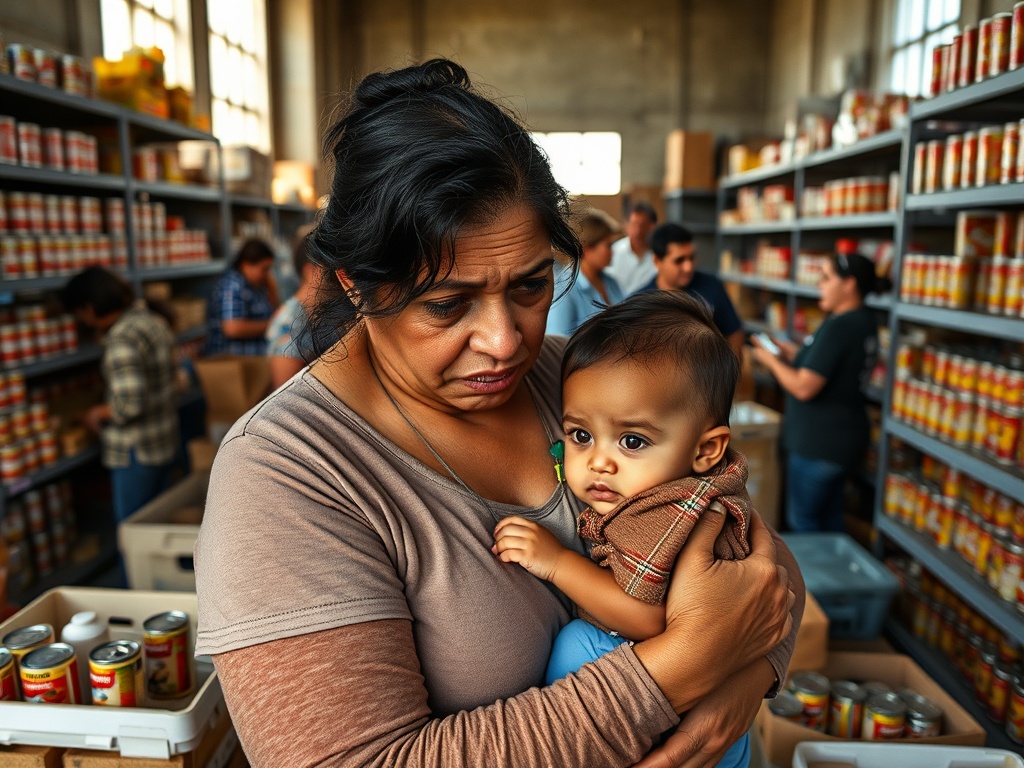
The impact of these reductions has strained Arizona’s food bank system. Food pantries across the state report overwhelmed operations and depleted shelves due to a surge in demand from families who lost SNAP benefits or are awaiting confirmation of their status. Phoenix Mayor Kate Gallego described the situation as an “all-hands-on-deck” emergency, urging residents to donate food and volunteer. Local food banks have noted an increase in new families seeking assistance, many of whom previously relied on SNAP for food security. Experts highlighted that for every meal provided by a food pantry, SNAP typically offers nine meals, underscoring the inadequacy of food banks as a substitute for federal nutrition assistance.
Economists and advocacy groups have pointed to the broader economic consequences of the SNAP reductions. The Arizona Center for Economic Progress reported that every dollar in SNAP benefits generates up to $1.80 in economic activity during downturns, supporting farmers, retailers, and local businesses. The loss of benefits for hundreds of thousands of residents could therefore have ripple effects beyond immediate food insecurity. Despite these concerns, state officials maintained that compliance with federal mandates was necessary to avoid significant financial penalties.
Arizona’s SNAP enrollment decline surpasses previous state projections and is the most substantial drop nationwide, according to data compiled by the Center on Budget and Policy Priorities. Over 400,000 residents in Phoenix alone rely on SNAP, including many families from refugee communities. The state’s aggressive implementation of the new federal requirements, coupled with agency funding cuts, has created barriers to access for eligible individuals, contributing to the steep enrollment decline.
The One Big Beautiful Bill Act’s expanded work requirements and removal of exemptions represent a significant shift in federal nutrition policy, with Arizona among the first states to fully enforce the changes. The long-term effects on food insecurity and state economies remain under observation as Arizona continues to adjust its SNAP administration in response to federal regulations and local needs.


Comments are closed.