

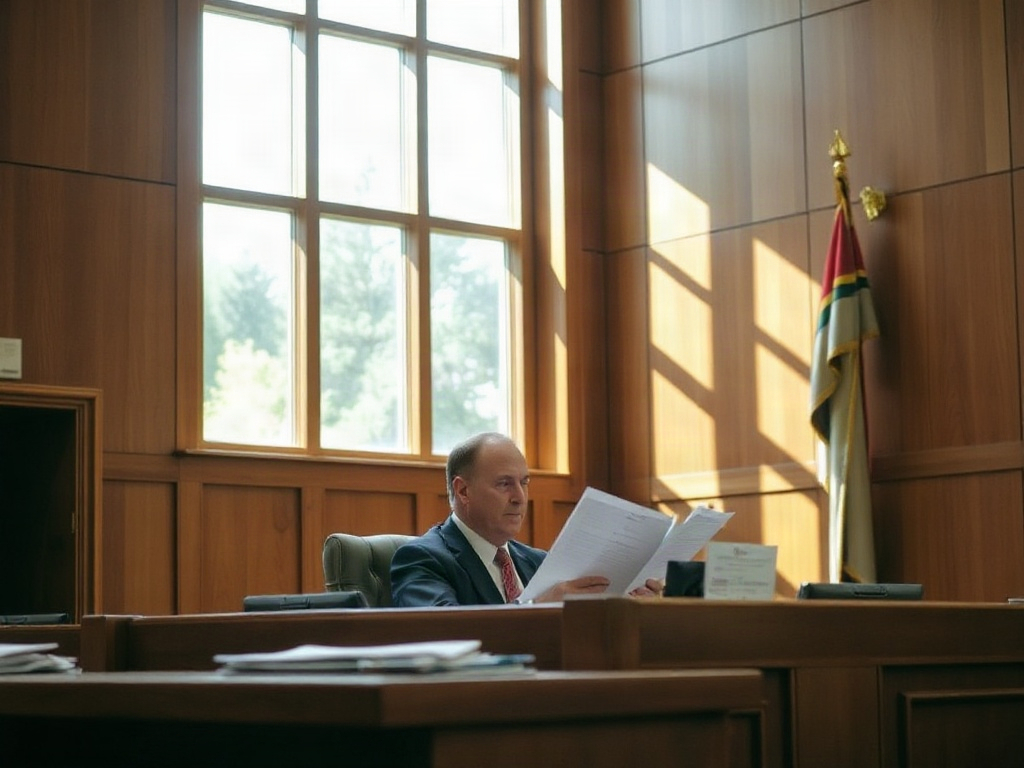
Pima County Superior Court judge dismisses former University of Arizona employee’s whistleblower termination lawsuit against Arizona Board of Regents

A Pima County Superior Court judge dismissed former University of Arizona business manager Clarissa Siebern’s wrongful termination and whistleblower retaliation lawsuit against the Arizona Board of Regents on Monday, August 25, 2026. Judge Kyle Bryson granted ABOR’s motion for summary judgment, ruling that Siebern’s claims of retaliation for complaints about workload, pay, and resources did not warrant a trial, according to court records.
Clarissa Siebern, who served as a business manager in the University of Arizona’s College of Education, filed the lawsuit in May 2025, alleging she was wrongfully terminated in retaliation for raising concerns about workload, pay, and resource issues within her department. According to court records and filings, Siebern asserted that her communications—including emails and meeting summaries—constituted protected disclosures under the Arizona Board of Regents’ (ABOR) whistleblower policy, known as Policy 6‑914. She argued that her efforts to highlight staffing shortages, pay equity, and delayed payments qualified as whistleblower complaints and sought damages and relief based on retaliation claims.
“Siebern asserted that her communications—including emails and meeting summaries—constituted protected disclosures under the Arizona Board of Regents’ (ABOR) whistleblower policy, known as Policy 6‑914.”
Judge Kyle Bryson’s ruling, issued August 25, 2026, granted ABOR’s motion for summary judgment and denied Siebern’s competing motion, effectively ending the case before trial. The decision vacated a trial scheduled for December 2026 and canceled all remaining pretrial deadlines, according to court documents. Bryson’s order concluded that Siebern’s claims did not meet the legal standard required to proceed under the whistleblower policy.
In his analysis, Bryson emphasized that ABOR Policy 6‑914 requires an employee to clearly indicate a belief that wrongdoing has occurred for a communication to qualify as a protected disclosure. The judge found that Siebern’s emails and meeting notes primarily reflected advocacy for her department’s operational needs rather than reports of misconduct or violations of law. “The policy implies a disclosing employee must make clear they believe wrongdoing occurred,” Bryson wrote in the ruling, adding that Siebern “never showed she intended to disclose wrongdoing” under the policy.
The judge characterized Siebern’s role as acting like a liaison between her department and university leadership, communicating routine problems and requests “as anyone in her exact position would be expected to do.” He further stated that discussions about workload and pay, even within a public university setting, do not inherently constitute matters of public concern under the whistleblower standard. Bryson noted that while there was a factual dispute over whether Siebern was terminated for her complaints or due to a payment delay, that question was moot because her communications were not protected disclosures.
ABOR was represented by the Phoenix-based law firm Cohen Dowd Durchslag, which publicly announced the summary judgment victory. In a statement, the firm said the court agreed that Siebern “did not report wrongful conduct on a matter of public concern under ABOR Policy 6‑914 prior to her termination.” ABOR attorney Betsy Lamm argued at a June 2026 hearing that Siebern’s allegations failed to meet the whistleblower standard as a matter of law, justifying dismissal without trial. Judge Bryson took the matter under advisement following that hearing before issuing the written ruling in August.
The case highlights the legal distinction in Arizona between internal workplace grievances and whistleblower disclosures. Previous rulings have established that university whistleblower protections require clear, documented allegations of wrongdoing such as fraud, illegality, or misuse of public funds, rather than routine operational complaints. Siebern’s lawsuit, according to court findings, fell into the latter category.
Siebern’s lawsuit named the Arizona Board of Regents as the sole defendant and was filed in Pima County Superior Court. The decision aligns with earlier Arizona precedent reinforcing that whistleblower protections under ABOR Policy 6‑914 depend on employees explicitly alleging misconduct rather than raising general concerns about department management or resource allocation. The ruling represents a judicial affirmation of how ABOR’s whistleblower policy is interpreted and applied in employment disputes involving University of Arizona personnel.


Comments are closed.