

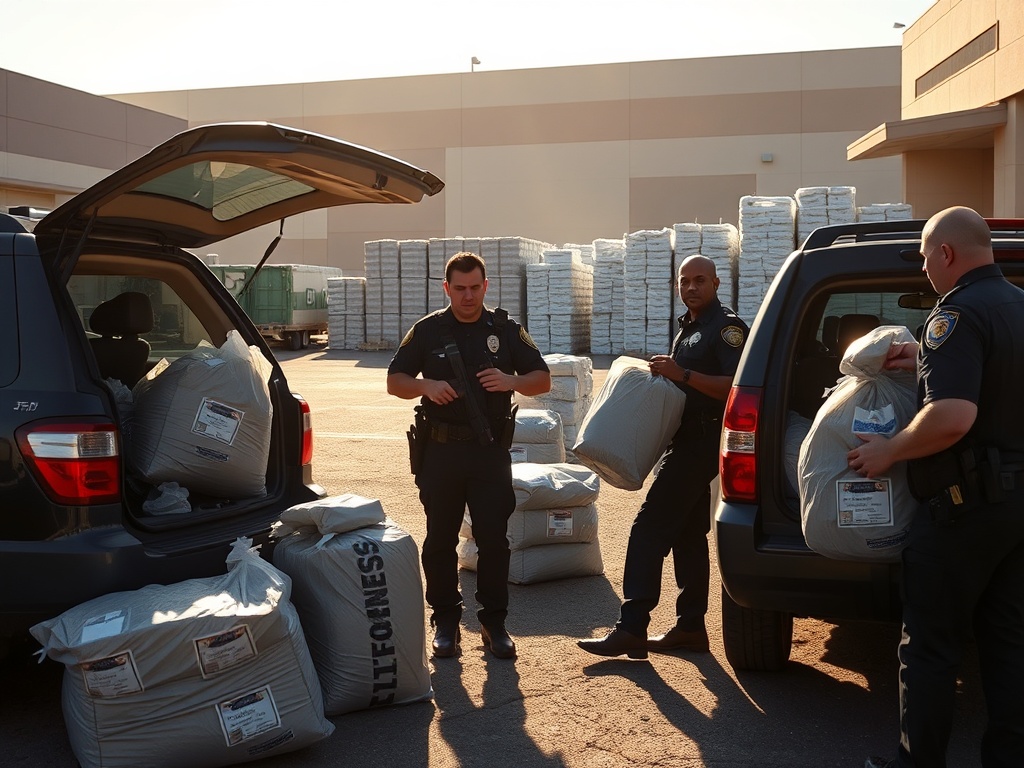

Scottsdale police seized nearly 1.7 million fentanyl pills and other drugs during a December 14, 2021, bust of a major fentanyl ring operating out of Maricopa County warehouses, officials said. The operation, led by the Scottsdale Police Department and the DEA Phoenix Field Division after a two-month investigation, targeted shipments linked to the Sinaloa Cartel and recovered drugs valued at $9 million, according to Scottsdale Police Chief Jeff Walther.
Scottsdale Police Chief Jeff Walther described the total street value of the drugs at $9 million during a news conference with federal officials. The operation was executed on Dec. 14, 2021, following a two-month investigation led by the Scottsdale Police Department in partnership with the DEA’s Phoenix Field Division and the Arizona Attorney General’s Office.
The seizure included nearly 1.7 million fentanyl pills, weighing approximately 360 pounds, along with an additional 10 kilograms of fentanyl powder and one pound of methamphetamine, officials said.
Investigators tracked a courier that led them to the primary stash location in the Phoenix Valley area, where the drugs were stored in Maricopa County warehouses, sources confirmed. The bust was part of a broader public safety surge involving state, local, and federal partners that yielded over three million fentanyl pills and 45 kilograms of fentanyl powder across multiple operations, according to records from the DEA and Scottsdale Police.
Officials said about 40% of the seized pills contained a lethal dose of fentanyl, with just two milligrams potentially fatal to users. The pills were counterfeit, designed to mimic legitimate prescription medications such as OxyContin, Percocet, and Xanax, according to the Arizona Attorney General’s Office. These counterfeit pills have been linked to at least 46 overdoses and 39 deaths in Arizona during the ongoing surge, authorities said.
The fentanyl and methamphetamine recovered in this bust were traced to the Sinaloa Cartel, a criminal network based in Mexico responsible for mass-producing fentanyl, according to DEA Phoenix task force sources. The chemicals used to manufacture these drugs largely originate from China and are distributed through Mexican trafficking networks, officials added. The counterfeit pills are produced to appear identical to real medications and have been found nationwide, according to federal reports.
The Scottsdale DEA task force’s two-month probe was part of a larger effort targeting Mexican drug networks involved in fentanyl trafficking. The operation was one of 32 cases linked directly to major Mexican cartels, officials said. The public safety surge also involved the seizure of 35 firearms and resulted in 40 arrests statewide, according to law enforcement sources.
In a related operation, the Maricopa County Sheriff’s Office seized more than 1.1 million fentanyl pills and 455 pounds of methamphetamine across multiple locations. That operation, which involved search warrants and 31 indictments coordinated by the Arizona Attorney General, uncovered two DMT labs and a methamphetamine wash lab, according to Maricopa County Sheriff’s Office records. The sheriff’s Multi-Disciplinary Street Team (MCDST) Unit collaborated with various agencies to target fentanyl manufacturing labs, which officials said were the most extensive in Maricopa County history.
Since January 2021, DEA Phoenix partners have seized over 9.5 million counterfeit fentanyl pills in Arizona, according to federal seizure data. The surge in fentanyl trafficking has also involved the use of social media platforms such as Snapchat, Instagram, and TikTok for distribution, with 76 cases linked to these channels, according to the Arizona Attorney General’s Office.
The seizures come amid a nationwide increase in fentanyl trafficking, with more than 1,500 pounds of fentanyl and eight million counterfeit pills seized across the United States during the same period, federal officials said. The Scottsdale operation is part of ongoing efforts to disrupt the supply of lethal synthetic opioids and reduce overdose deaths linked to counterfeit prescription drugs.


Comments are closed.