

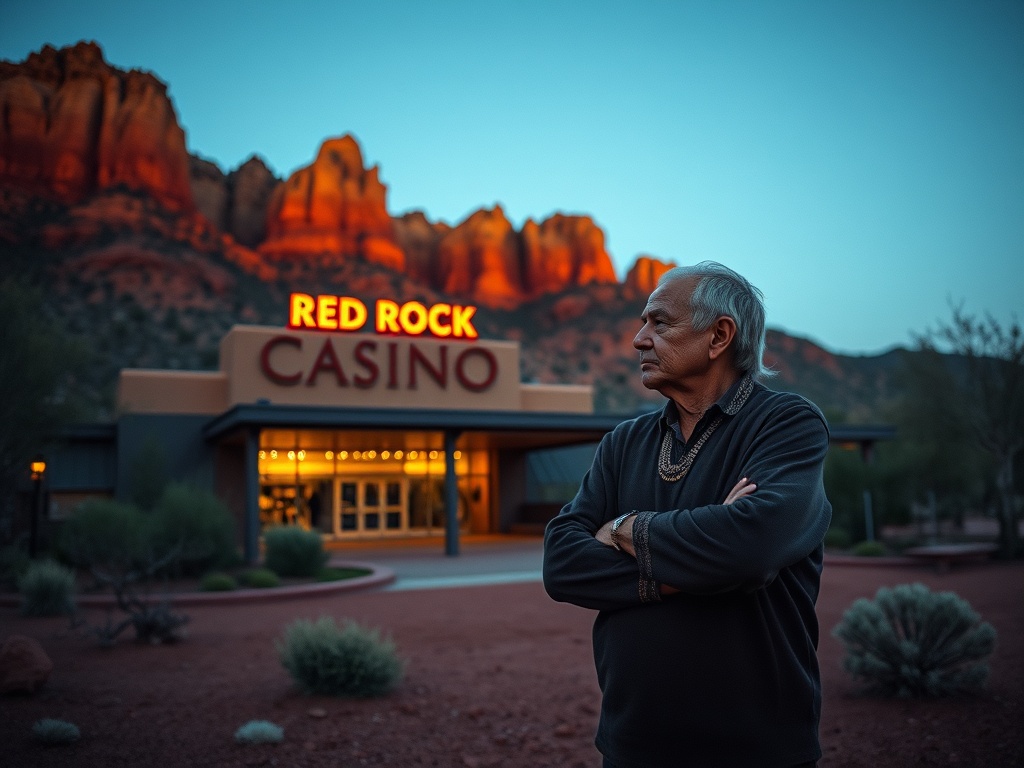

The Yavapai-Apache Nation filed a lawsuit Tuesday against Sedona Red Rock Casino in Arizona over alleged violations of tribal water rights. The tribe claims the casino’s water use infringes on their federally recognized rights established under a 2024 settlement agreement aimed at protecting the Verde River and ensuring sustainable water supplies, officials said.
The lawsuit challenges Sedona Red Rock Casino’s water use as exceeding the rights secured by the Yavapai-Apache Nation under a 2024 settlement agreement, officials said. The settlement, unanimously approved by the Yavapai-Apache Tribal Council on June 26, 2024, quantifies the tribe’s water rights at 4,610 acre-feet annually—equivalent to about 1.5 billion gallons—and aims to protect the Verde River and ensure sustainable water supplies for the tribe’s five reservation districts in the Verde Valley, according to tribal and state records.
The agreement resolves longstanding claims that have been pending in Arizona courts for more than 40 years, officials said.
It involves multiple stakeholders, including the State of Arizona, the U.S. government, Salt River Project, and local Verde Valley communities. The settlement promotes conservation measures and safeguards groundwater and surface water resources, while also protecting non-tribal communities, ditch right owners, and future developments that meet conservation standards from litigation, according to a statement from the Yavapai-Apache Nation.
The tribe’s water rights are based in part on a 1980 contract with the U.S. Department of the Interior for 1,200 acre-feet annually from the Central Arizona Project, which delivers Colorado River water. The 2024 settlement expands and formalizes these rights, confirming access to water from a combination of groundwater, surface water, and the Central Arizona Project, tribal officials said. The agreement also includes funding authorization of $1.039 billion for water infrastructure projects, such as the Cragin-Verde Pipeline and a surface water drinking plant, to ensure sustainable delivery to the Yavapai-Apache communities, according to legislative records.
The Yavapai-Apache Nation’s water rights settlement is awaiting Congressional ratification and funding through the bipartisan Yavapai-Apache Nation Water Rights Settlement Act, reintroduced by Senators Mark Kelly and Ruben Gallego. The House companion bill, H.R. 8949, was introduced by Rep. Eli Crane (R-Arizona-2), who also introduced H.R. 6931 in December 2025 to codify the settlement. Rep. Crane said the legislation “builds momentum for a long-term rural Arizona water solution” and strengthens water reliability for the tribe’s more than 2,500 enrolled members, according to his office.
The settlement also includes a U.S. Forest Service land exchange to consolidate tribal lands near the Middle Verde Reservation, officials said. The agreement requires the tribe not to litigate existing surface water claims in the Verde River Watershed or alter existing ditch administration, which helps protect the rights of local agricultural users and communities. The State of Arizona had previously demanded that tribes waive rights to reservation expansion through the Interior Department as a condition for settlements, a policy that tribal representatives called a “huge obstacle” during negotiations, according to testimony given to the Arizona Department of Water Resources in 2020.
Negotiations faced delays due to concerns over state requirements for tribes to waive objections to future groundwater pumping that could harm reservation water resources, sources confirmed. The Yavapai-Apache Nation’s settlement is one of two Arizona Indian water rights agreements pending Congressional approval, marking a significant step toward resolving complex water disputes in the region.
The tribe’s efforts build on previous collaborations, including a 2023 wastewater agreement with the City of Sedona as part of a broader water management strategy. Chairman Buddy Rocha Jr. said the passage of the settlement “will finally resolve our water rights claims, providing water certainty for the Nation and our neighbors,” according to a tribal press release.
The settlement promises to bring greater certainty to water allocations in the Verde Valley, protecting local groundwater supplies and the flow of the Verde River, which is a critical resource for communities and ecosystems in the area. It also aims to shield Verde Valley residents and ditch users from future litigation related to water rights, according to the agreement documents.
The Yavapai-Apache Nation spans five reservation districts in the Verde Valley with a relatively small land base but faces diverse water challenges, tribal sources said. The settlement’s infrastructure projects are designed to make water accessible and usable for the tribe’s communities, helping to address these challenges while promoting conservation and sustainability.
As the legislative process continues, the tribe, state, and federal partners remain engaged in efforts to implement the settlement and develop the necessary infrastructure to secure the tribe’s water future. The outcome of ongoing Congressional action will determine the timing and scope of these efforts.


Comments are closed.