

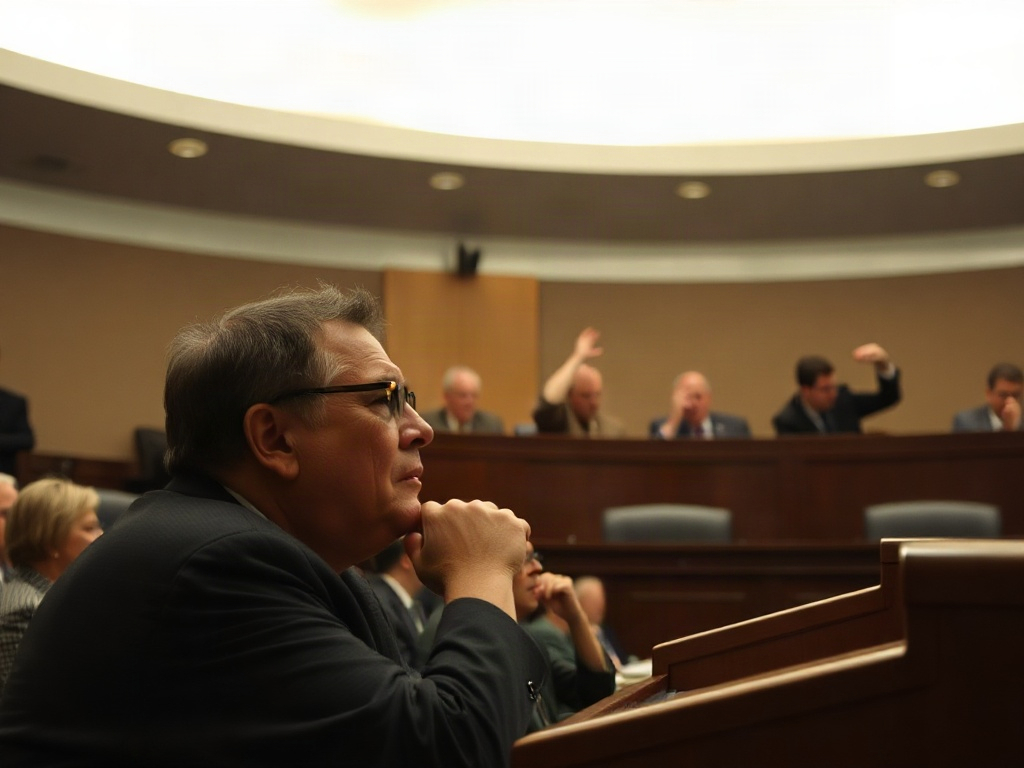

The Chandler City Council on Thursday approved a 4.5% solid waste rate increase and tentatively approved increases for water, wastewater, and reclaimed water rates, with final water-rate approval scheduled for November. The increases, taking effect Jan. 4, 2027, were needed to address the city’s financial plan, according to budget and policy director Matt Dunbar.
The increases will take effect Jan. 4, 2027, for Fiscal Year 2026-27, according to city records. Water rates are proposed to rise 9%, wastewater 6.5%, reclaimed water 9%, and solid waste 4.5% for both residential collection and alley charges, city officials said.
For residents, the increases translate to about $6 more per month for an average home using roughly 10,000 gallons of water, Dunbar said — $3 from water, $2 from wastewater, and $1 from the solid waste increase.
Matt Dunbar, the city’s budget and policy director, said the across-the-board approach was driven by rising costs. “In this last review of the city’s financial plan, it was determined that a 9% increase for water, 6.5% increase in wastewater, 9% for reclaimed and a 4.5% increase in solid waste was needed,” Dunbar said.
Dunbar cited “significant changes to operating costs; … unprecedented inflation; … the growth in different classification areas” as reasons for the increases. He pointed to rising costs for chemicals and electricity essential to providing safe drinking water and treating wastewater, higher contract costs for solid waste and recycling collection, and increased capital construction materials and debt service tied to water and wastewater facility and infrastructure projects.
Planned improvements include upgrades to the water treatment production plant, the water reclamation facility, and advanced wastewater treatment processes, according to city officials. Aging infrastructure work includes main replacements, well construction and rehabilitation, and sewer assessments and rehabilitation.
The average monthly utility bill for a Chandler resident will rise from $84 to $90, according to city officials.
The rate adjustments will be applied equally across customer classifications, including single-family, multi-family, non-residential, landscape, and industrial classes for water, and across single-family, multi-family, and non-residential classes for wastewater, officials said.
The council’s tentative approval came after a work session held Aug. 10, 2026, at the City Council Conference Room, 88 E. Chicago St., according to city records. The proposed rates were first presented in the city’s proposed budget book, which has been online since May 1, and have not changed since that time, Dunbar said. “The financial outlook for utilities remains the same,” he said.
Dunbar said a new Cost of Service study is needed to guide future rate-setting, but it will not be completed in time for this year’s increase.
Even with the increases, city officials said Chandler will retain the lowest utility rates in the Valley. Chandler’s average monthly bill of $90 is $29 less than Peoria’s average, according to city figures. Scottsdale residents pay about $121, Tempe $130, Phoenix $135, Glendale $148, and Mesa $163, while Gilbert has the highest average monthly bill in the Valley at $179, officials said.
The city says the increases reflect today’s cost of service to deliver safe and reliable water, process wastewater, and provide solid waste and recycling services.
The increases drew opposition from residents at the previous week’s council meeting. Chandler resident Michael Oei said the costs have him reconsidering his future in the city. “Costs are just kind of getting out of hand, I think for a lot of people living in Chandler is getting out of reach,” Oei said, adding that the new costs affect his planning for food, travel, and housing.
The council previously decided on across-the-board increases rather than cost-of-service-based rates, in part over concerns that major businesses such as Intel would face massive increases and look elsewhere, according to officials. Officials worried that losing large businesses could trigger a ripple effect forcing the city to raise everyone’s rates to compensate, meaning residents would subsidize businesses under the across-the-board plan.
Final approval of the proposed water, wastewater, and reclaimed water rate increases is scheduled for November, following the tentative vote.


Comments are closed.