

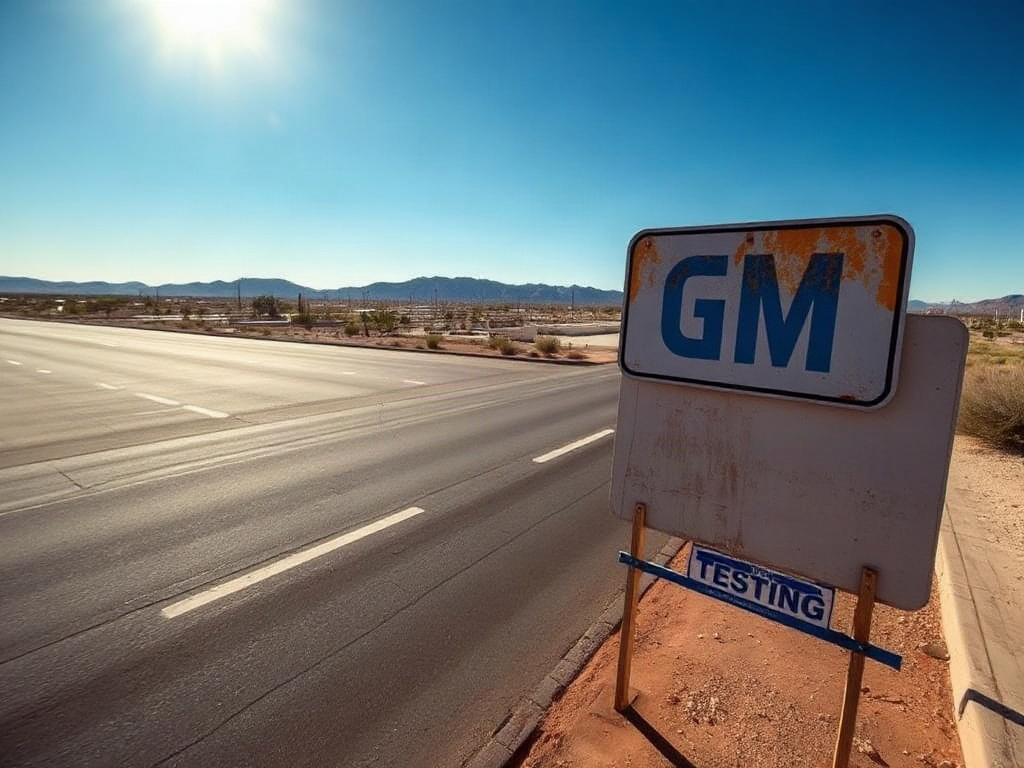

Mesa officials approved plans for Legacy Park, a mixed-use community featuring about 2,400 homes and commercial space on roughly 196 acres of the former General Motors Proving Ground site at South Ellsworth and East Williams Field roads. According to developer Vestar, the project aims to transform the vacant property into a 9.4 million-square-foot complex with multifamily residences, offices, and retail, continuing the site’s shift from automotive testing to residential and commercial use.
Legacy Park is planned as a 9.4 million-square-foot mixed-use complex on approximately 196 acres at the northeast corner of South Ellsworth and East Williams Field roads, according to developer Vestar. The community will feature about 2,400 to 2,500 multifamily residences integrated with commercial businesses, offices, and amenities. Vestar projects phase one to cost more than $1 billion, with construction slated to begin in 2027 and completion targeted for 2029.
The first phase is expected to deliver roughly 700 residential units situated above a 300,000-square-foot retail complex that will include upscale retailers and restaurants.
The full build-out of Legacy Park will include 3.4 million square feet of mid-rise office and corporate campus space, creating a significant employment hub in Mesa’s East Valley. The project also calls for a 600-room resort hotel developed by Athens Group, adding hospitality and conference facilities to the site. Parks and recreation areas are planned throughout the community, including a 20-acre urban park centered around a large lake, designed to serve both residents and commercial tenants, according to Vestar and Pacific Proving, the landowner.
Pacific Proving owns the larger 1,805-acre former General Motors proving ground site, which has been undergoing a transition from automotive testing to residential and commercial development for more than a decade. The Legacy Park site is part of this broader transformation, which includes the Eastmark community developed on about 3,200 acres of the former proving grounds. Eastmark, developed by DMB Associates following a $260 million purchase in 2006, features around 800 homes, nine neighborhoods, and extensive park connectivity, serving as a precedent for large-scale residential projects in the area.
The Legacy Park development is part of a wider vision for the former GM property to become a “dense, quality, lifestyle environment” with walkable residential, retail, and corporate campus uses, Pacific Proving and Mesa BA Land principals Andrew Cohn and Bill Levine have said in public statements. Adjacent projects on the former proving grounds include industrial and technology parks, such as Legacy Industrial Park and the Pacific Proving Technology Park data center complex, reflecting a diversified land-use pattern.
According to planning documents, the Legacy Park housing will be primarily multifamily residences integrated with retail and other amenities rather than stand-alone single-family subdivisions. Additional phases beyond the initial 700 units will be developed over time based on market demand and economic conditions, with the full project reaching approximately 2,500 homes. The surrounding Pacific Proving Grounds North area allows for a mix of detached and attached single-family homes, small-lot single-family residences, and multi-residence housing, supporting a variety of housing types in the broader community.
The resort hotel component within Legacy Park is to be developed by Athens Group, a hospitality developer separate from Vestar and Pacific Proving. The hotel is planned to include 600 rooms, providing lodging and conference space to complement the commercial and office uses in the development.
Multiple private-sector players are involved in shaping the former GM site’s redevelopment. Besides Vestar and Pacific Proving, DSV Air and Sea recently acquired about 87 acres within the proving grounds for a corporate headquarters project, underscoring ongoing corporate interest in the area.
Legacy Park’s first phase is planned to break ground in 2027, with Vestar aiming to deliver the initial residential and retail components by 2029. Subsequent phases will add office buildings, additional housing, and the resort hotel, progressing according to economic conditions and market demand. Meanwhile, Pacific Proving and Mesa BA Land have indicated plans to break ground within two years on a broader mixed-use lifestyle development encompassing other portions of the former proving grounds.
The former General Motors proving grounds in Mesa was historically a large automotive testing facility. Its transformation began with the sale of land parcels for master-planned communities and commercial uses. Eastmark’s development, initiated in 2006, set a precedent for residential and mixed-use growth on the site. Since then, the area has evolved to include industrial parks, technology centers, and now Legacy Park, reflecting Mesa’s long-term strategy to repurpose the proving grounds into a multifaceted urban environment combining housing, employment, retail, and recreation.


Comments are closed.