

Maricopa County judge sentences former Mesa contractor in fraud scheme tied to public-school renovation work

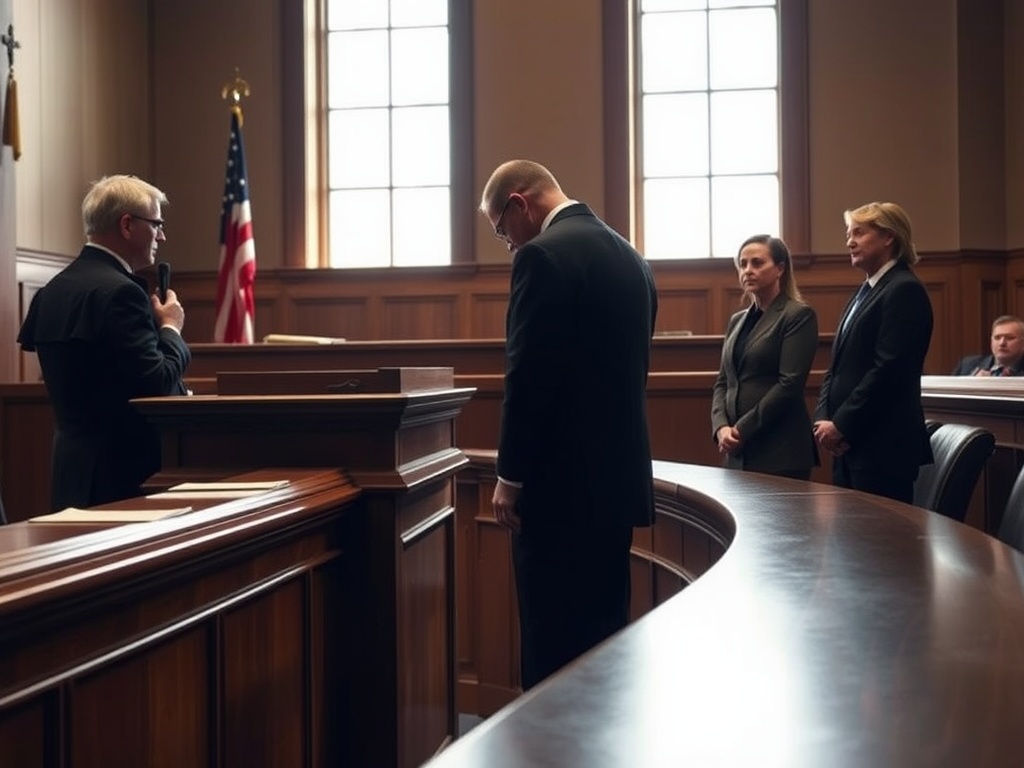
A Maricopa County judge sentenced a former Mesa contractor Thursday for his role in a fraud scheme involving public-school renovation projects. According to court documents, the contractor conspired to defraud the school district by accepting payments for work that was never completed.
The former Mesa contractor was sentenced Thursday by a Maricopa County judge following a conviction related to a scheme that involved accepting payments for public-school renovation work that was never completed, according to court documents. The sentencing concludes a case that highlighted fraudulent activity affecting local school district funds.
The scheme reportedly spanned multiple projects and involved significant sums of money intended for improving public-school facilities.
Records show the contractor conspired with others to defraud the school district by billing for renovation projects that were either partially done or not performed at all. Officials from the Maricopa County Superior Court confirmed the sentence but did not release specific details about the length of the sentence or restitution ordered.
While the precise financial impact of the fraud scheme in Mesa has not been publicly disclosed, similar cases in the region provide context for the scale of such offenses. For example, a U.S. Department of Justice (DOJ) report detailed a Texas-based construction fraud case involving Christopher Judge, a business owner who pleaded guilty to conspiracy to commit wire fraud. In that case, the defendants took payments totaling approximately $4.8 million for unfinished custom home and remodeling projects, according to DOJ records. Christopher Judge faced a potential sentence of up to 20 years in federal prison, with sentencing scheduled for May 12, 2026.
The DOJ identified Christopher and Raquelle Judge as managing members of Judge DFW LLC, a Texas limited liability company offering custom architecture, construction, and interior design services. Prosecutors said the defendants conspired to defraud consumers from August 2020 to January 2023 by accepting payments for projects that were never completed. Though this case was not connected to Arizona, it illustrates the nature of construction-related fraud schemes involving incomplete work and false billing.
In Arizona, public-school construction and renovation projects have been under increased scrutiny due to ongoing legal and oversight challenges. A notable ruling in 2025 by a Maricopa County judge found the state’s public-school financing system unconstitutional, describing it as creating disparities between districts that can and cannot pass local bonds. This decision followed an eight-year legal battle and has significant implications for how school facilities and renovations are funded statewide, according to reports by Arizona Family and court documents.
Other school-related fraud cases in the region have involved different forms of misconduct. For instance, a former Goodyear charter school principal was sentenced for enrolling nonexistent students to obtain extra government funds, resulting in more than $2 million in restitution and a prison sentence exceeding three and a half years. Additionally, federal authorities reported the sentencing of a local contractor involved in bribing a former school board president in Madison District Public Schools, highlighting corruption tied to school operations. These cases were documented by the U.S. Department of Education Office of Inspector General and other oversight agencies.
Despite these related cases, no publicly available sources directly confirm the details of the Mesa contractor’s sentencing beyond the court’s announcement. Maricopa County officials have not released further information about the investigation or the identities of other individuals involved. The case adds to a pattern of legal actions addressing fraud and mismanagement of public funds in school construction and renovation projects across Arizona.
The broader context of these cases underscores ongoing challenges in ensuring transparency and accountability in the use of public funds for school infrastructure. State and federal agencies continue to investigate and prosecute instances of fraud and corruption linked to school construction financing. The recent Maricopa County ruling on the school financing system further emphasizes the need for reform in how Arizona funds and oversees public-school facilities.
Additional developments in the Mesa contractor case and related investigations are expected as authorities pursue further enforcement actions. Meanwhile, the state’s school districts and lawmakers face pressure to address systemic issues in school construction funding and oversight to prevent similar fraud schemes in the future.


Comments are closed.