

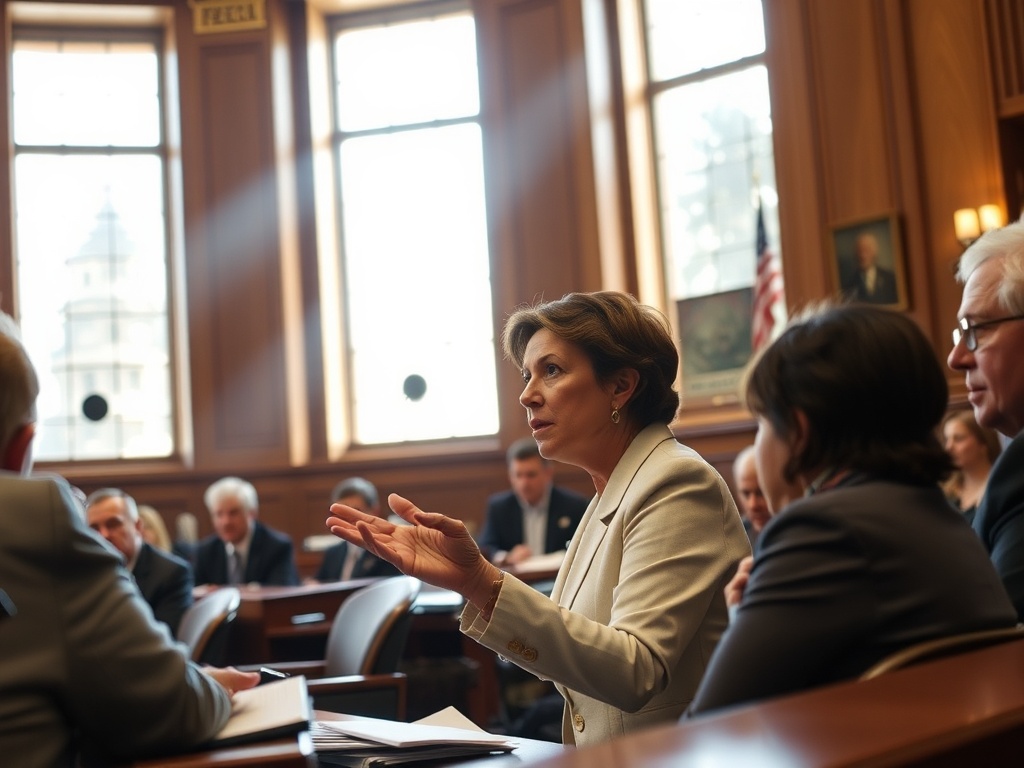
State Senate moves to rein in Arizona’s Empowerment Scholarship Account program as education candidates debate funding in Tucson

The Arizona State Senate moved Tuesday to impose new restrictions on the Empowerment Scholarship Account program, which allows families to use state education funds for private schooling and other alternatives. Lawmakers said the changes aim to tighten eligibility and spending rules amid ongoing debates over education funding in Tucson ahead of upcoming elections.
The proposed legislation aims to tighten eligibility requirements and spending rules for Arizona’s Empowerment Scholarship Account (ESA) program, which has expanded significantly since becoming universal for K–12 students in 2022. The ESA program, administered by the Arizona Department of Education, allows families to use state education funds for private school tuition, curricula, tutoring, and other approved educational expenses outside traditional public schools, according to the department’s official ESA page.
Families receive prepaid bank cards loaded with 90% of the amount the state would otherwise allocate to a public school for each participating student.
Under current law, codified in Arizona Revised Statutes Title 15, Chapter 19 (A.R.S. §§ 15-2401 through 15-2404), any Arizona resident eligible to attend a K–12 public school can participate in the ESA program without a cap on enrollment, according to a 2024 Arizona Senate issue brief. This contrasts with earlier rules that limited eligibility to students who had attended a public school full-time for at least 45 days in the current or prior school year and capped new ESA recipients at 0.5% of district and charter enrollment from the previous year. Those caps were removed prior to the 2022 expansion, leading to unrestricted growth in ESA participation.
Funding for ESA accounts is distributed quarterly rather than as a lump sum, with amounts based on prior-year state funding factors until current-year figures are finalized, the Arizona Department of Education’s 2025–2026 ESA Parent Handbook states. Adjustments to award amounts may occur in the second quarter of the school year. Disability Rights Arizona, which provides a guide to the ESA program, notes that families receive prepaid bank cards loaded with 90% of the amount the state would otherwise allocate to a public school for each participating student. Annual funding varies widely, ranging from approximately $3,000 for some students to nearly $37,000 for those with significant disabilities, depending on individual circumstances and funding categories.
ESA funds must be used for qualified educational expenses, including private school tuition, approved curricula, tutoring, and educational supplies, according to the Arizona Department of Education. Some expenditures, such as consumable supplies, computer hardware, and transportation, are prohibited, as outlined by Disability Rights Arizona. Parents are required to maintain records and comply with spending rules under their ESA agreements, and the department exercises oversight to ensure accountability.
The Senate’s recent move to impose new restrictions reflects concerns among some lawmakers about the program’s rapid growth and fiscal impact. The 2024 Senate issue brief acknowledges that the Legislature previously enacted caps to control enrollment and funding but removed them before the program’s universal expansion. Current legislative efforts appear focused on reinstating tighter eligibility criteria and enhancing oversight to address these concerns.
The policy debate surrounding the ESA program has become a significant issue in Tucson, where education candidates are actively discussing the allocation of state education funds. Critics argue that the expansion of ESA accounts diverts money from public schools and complicates district budgeting, while supporters contend that ESA dollars follow the student and provide families with more educational choices. This debate is part of a broader statewide conversation on school finance, with Tucson’s public schools facing budget pressures amid shifting enrollment patterns.
The Arizona Department of Education’s ESA webpage, the 2024 Arizona Senate issue brief, and the 2025–2026 ESA Parent Handbook serve as primary sources for program details, eligibility rules, and funding mechanisms. Disability Rights Arizona’s ESA guide offers additional insight into practical aspects of the program, including spending restrictions and funding estimates. Legislative actions and local election debates continue to shape the future of the ESA program as lawmakers and education stakeholders weigh competing priorities in Arizona’s education system.


Comments are closed.