

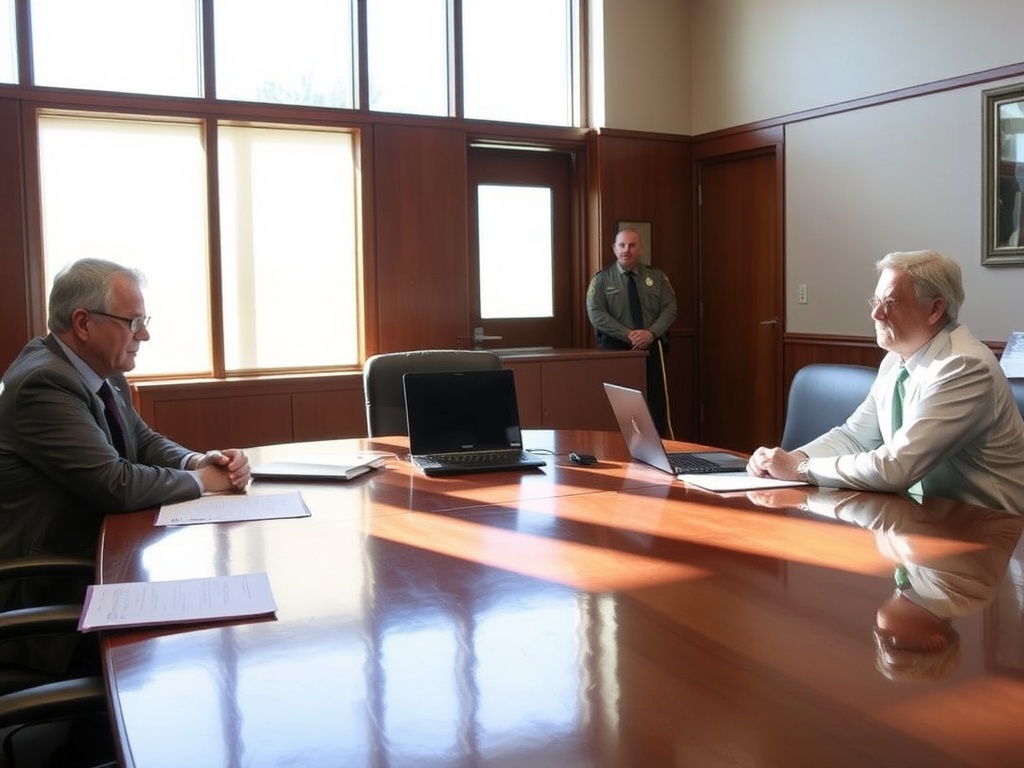
Tucson County supervisors weigh next steps after dispute over sheriff oversight and public safety spending

On Nov. 12, 2024, the Pima County Board of Supervisors unanimously voted to request an independent investigation into whether Sheriff Chris Nanos committed criminal wrongdoing related to an election controversy in Tucson. The board sought the review after Nanos placed a political opponent and sheriff’s department employee on leave before the election, which officials said raised questions about potential perjury and misuse of authority.
The investigation follows Nanos’ decision to place a political opponent and sheriff’s department employee on leave before the election, a move that raised concerns among supervisors about potential misuse of authority. According to the sheriff’s office, the leave was administrative rather than punitive, with no suspension or loss of pay, and the employee was not barred from campaigning.
The Pima County Board of Supervisors voted unanimously on Nov. 12, 2024, to request an independent investigation into whether Sheriff Chris Nanos committed criminal wrongdoing, focusing on allegations of perjury related to an election controversy.
The board did not vote on a formal censure of Nanos during the Nov. 12 meeting, as legal counsel from the Pima County Attorney’s Office advised against such action. Chief Civil Deputy Samuel Brown, a county attorney, raised concerns about the legal ramifications of disciplinary measures, which influenced the supervisors’ decision to forgo censure at that time. Supervisors also considered but did not advance a motion to remove Nanos from office, as the motion failed for lack of a second. Instead, the board chose to refer the allegations to Arizona Attorney General Kris Mayes’ office for further review.
Following the board’s vote, Sheriff Nanos publicly denied any wrongdoing, stating he had “never lied,” according to local reports. In a related development, Nanos did not attend his own accountability hearing but instead submitted a 12-page letter and was represented by a lawyer. The hearing, which addressed questions about his disciplinary history, management of the sheriff’s department, and conduct in office, is part of an ongoing dispute over oversight and accountability.
The controversy has expanded beyond the initial election-related allegations. In March 2026, the Pima County Board of Supervisors unanimously voted to compel Nanos to answer questions under oath concerning his disciplinary record and department management. After receiving his written response, the board postponed further public discussion of the matter, as reported by the Tucson Sentinel on April 22, 2026. By May 2026, supervisors were considering additional disciplinary actions and weighing next steps, according to KOLD News.
Financial management within the sheriff’s department has also become a point of contention. According to Tucson Spotlight, department counsel stated the agency operated under budget in three of the fiscal years since Nanos took office. The report noted a $1.3 million budget overrun in fiscal year 2023 attributed to a mid-year pay increase for corrections employees approved by the board, and another overrun in fiscal year 2025 linked to a budget decrease. Counsel further reported that the department contributed a net $6.4 million to the county’s general fund over the past five years through budget surpluses. These figures have been cited in the broader debate over public safety spending and fiscal oversight.
The timeline of media reports reflects the evolving nature of the dispute. On Nov. 12, 2024, AZ Luminaria and local television outlets reported the supervisors’ unanimous vote to seek an independent investigation and the referral to the Arizona Attorney General’s office. Subsequent coverage by the Tucson Sentinel in April 2026 and KOLD in May 2026 documented the board’s ongoing deliberations over Nanos’ conduct and potential disciplinary measures. The issue has shifted from an election-related allegation to a wider conflict involving department oversight, discipline, and budget management.


Comments are closed.