

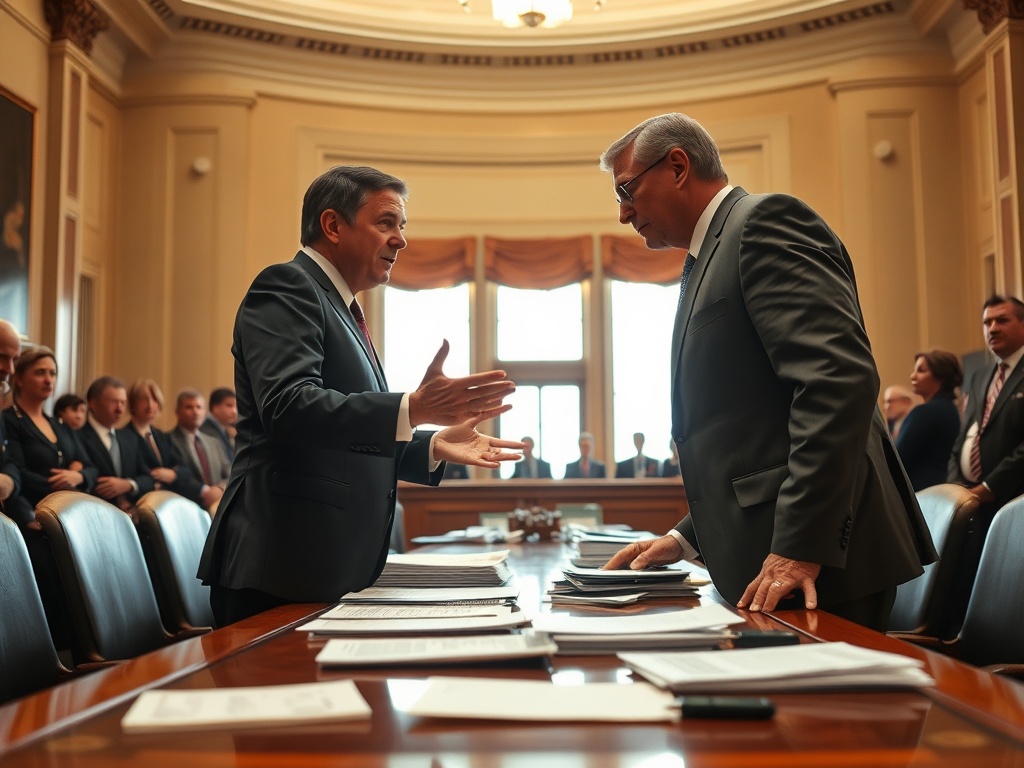
Arizona lawmakers clash over border security funding and immigration enforcement measures in final budget talks

Arizona lawmakers clashed over border security funding and immigration enforcement measures during final budget talks this week in Phoenix. The dispute centered on whether increased appropriations, including a potential $23 million boost to the local border support fund, would be used for immigration enforcement or limited to public safety, according to sources familiar with the negotiations.
Republican lawmakers have advocated for the boost, framing it as necessary to enhance border security and provide additional resources to law enforcement agencies in border communities. They argue the funding is aimed at addressing public safety concerns linked to border conditions rather than directly supporting immigration enforcement operations.
The dispute over border funding focused on a proposed increase to the local border support fund, which could grow to $23 million, according to a March 17 report by the Arizona Mirror.
Democratic lawmakers, however, have expressed reservations about the potential uses of the increased funds. They caution that the expanded border support fund could be used to assist immigration enforcement activities beyond basic public safety, a point highlighted in the Arizona Mirror’s coverage. Sen. Ruben Gallego, D-Arizona, reiterated these concerns during a February 13 interview with NPR, warning against hastily allocating resources to federal agencies such as Immigration and Customs Enforcement (ICE) and Border Patrol. Gallego referenced recent incidents in which two Americans lost their lives within a two-and-a-half-week span, emphasizing the need for clear guardrails to prevent misuse of funds for enforcement crackdowns.
The divide over border funding reflects broader tensions about the state’s role in immigration enforcement versus federal responsibility. Republicans maintain that additional funding is vital for law enforcement agencies to respond effectively to border-related crime and disorder. They reject claims that border-security spending inherently equates to immigration enforcement, instead positioning it as support for Arizona communities affected by border challenges. Democrats counter that any increase in border-related appropriations should come with strict limitations to avoid expanding immigration enforcement efforts at the state level.
This state-level budget debate occurs against the backdrop of a contentious federal funding fight. On February 13, 2026, during a Senate debate over the Department of Homeland Security (DHS) budget, Sen. Gallego voted against funding that would rapidly allocate resources to agencies like ICE and Border Patrol, according to NPR. The vote took place amid concerns that a partial government shutdown could occur, with Gallego stating that agencies still had a few weeks of funding remaining but cautioning against hastened appropriations. The federal DHS funding dispute underscores the complexities of coordinating border operations that involve both federal and state agencies.
The controversy also intersects with discussions surrounding Proposition 314, a ballot measure debated in Arizona that critics say lacked adequate funding and would impose costly immigration enforcement mandates on local law enforcement. During a YouTube-recorded debate, Sen. John Kavanagh, R-Arizona, criticized the measure as “blatantly unconstitutional” and likened it to a “New York style stop and frisk” policy. Opponents cited a nonpartisan estimate from the Grand Canyon Institute projecting that some immigration provisions of Proposition 314 could cost the state at least $325 million annually. They argued that local law enforcement would be forced to act as “Arizona’s own duplicate Border Patrol” without sufficient funding or training.
Concerns from corrections and local agencies have also factored into the budget discussions. Officials warned that the Arizona Department of Corrections could face approximately $250 million in annual costs if Proposition 314 were implemented, according to debate transcripts. They cautioned that the state did not have the financial capacity to absorb such expenses amid an existing budget deficit. Committee members heard testimony from agencies claiming they lacked the resources to fulfill the operational demands of immigration enforcement policies, which has fueled lawmakers’ caution about adopting enforcement-heavy measures without jeopardizing other public services.
The dispute has revived longstanding debates about Arizona’s role in immigration enforcement. The Arizona Mirror noted in its March 2026 report that Republicans and Democrats continue to interpret the same border funding stream differently: Republicans view it as support for security and public safety, while Democrats see risks of enabling enforcement actions. A Congressional Research Service product on border security further emphasizes that immigration enforcement between ports of entry remains primarily a federal responsibility, adding to the controversy over state-level involvement.
In July 2025, Arizona Gov. Katie Hobbs’ office sent a letter to DHS Secretary Kristi Noem requesting federal reimbursement for border-related costs, illustrating state leaders’ efforts to secure federal support amid border pressures. As budget negotiations proceed, lawmakers continue to grapple with whether Arizona should allocate state dollars to border measures that may overlap with federal immigration enforcement duties.


Comments are closed.