

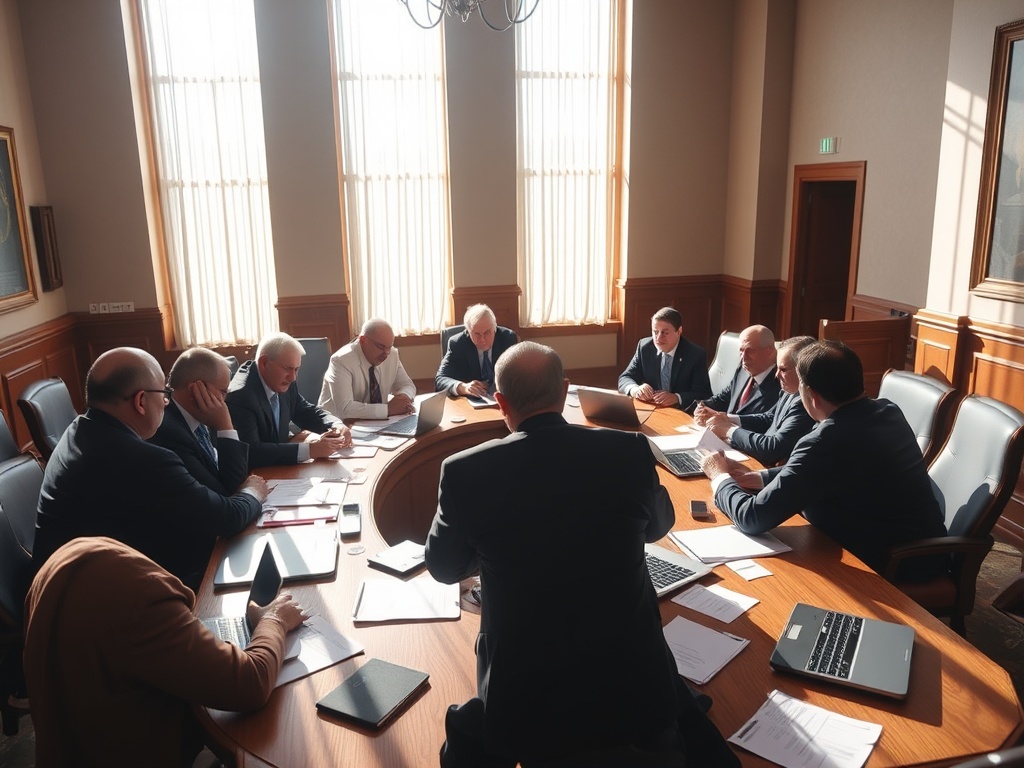

Maricopa County officials intensified budget negotiations Tuesday following the Arizona Senate GOP’s unveiling of a $17.9 billion state spending plan. The timing and higher spending levels in the Senate proposal pressured county leaders to adjust their tentative FY 2026 budget ahead of the June 30 state deadline, officials said.
The Arizona Senate Republicans passed a $17.9 billion state budget plan earlier this month, a figure that exceeds the House GOP’s earlier $17.3 billion proposal and complicates funding expectations for counties like Maricopa, officials said. The Senate plan, which was later adjusted to a $17.6 billion framework negotiated with Gov. Katie Hobbs and approved by the Senate in the early hours of June 20, 2025, sets the stage for compressed budget talks at the county level. Maricopa County officials must now align their tentative fiscal year 2026 budget with the final state spending plan ahead of the June 30 statutory deadline, sources confirmed.
The Maricopa County Board of Supervisors approved a tentative FY 2026 budget described as featuring “major investments, major savings, and a tax rate cut,” according to official county statements.
The plan includes a property tax rate reduction, continuing a trend of cuts that have occurred for four consecutive years, while balancing the need to fund capital projects and county services. County budget documents show a multi-billion-dollar financial plan covering operations and infrastructure improvements, including a new state-of-the-art election tabulation center and upgrades to animal care facilities, officials said.
County leaders emphasized that about 20% of Maricopa County’s funds are pre-committed to state-mandated programs, such as health and human services, limiting flexibility in budget adjustments. These mandates, officials said, require the county to fund long-term care and other state-directed responsibilities regardless of available discretionary revenue. Because the Senate GOP budget plan and competing proposals may shift state aid or alter formula distributions, county budget staff are modeling multiple scenarios to anticipate impacts on mandated spending and discretionary programs. The county’s budget office uses detailed financial projections and departmental appropriations to track how changes in state policy, particularly in healthcare and criminal justice funding, will affect county operations, sources confirmed.
The timing of the Senate GOP’s budget unveiling has intensified negotiations within Maricopa County, as the FY 2026 budget must be tentatively adopted, subjected to public hearings, and finalized before the new fiscal year begins on July 1. Any late changes in the state budget could force last-minute amendments or rebalancing of county allocations, officials said. The urgency is compounded by the ongoing conflict between Gov. Hobbs and Republican lawmakers, who have criticized each other’s budget plans. Hobbs has publicly rejected GOP proposals as unbalanced and has indicated she will veto a continuation budget favored by some House Republicans, according to statements from her spokesperson Christian Slater.
The House Appropriations Committee advanced a separate $17 billion House GOP plan on June 24, 2025, which Gov. Hobbs also rejected, increasing uncertainty over the final state budget. The House had adjourned until June 23, delaying action and narrowing the window for a state budget agreement before the June 30 deadline. The Arizona Capitol Times reported that failure to reach a deal could lead to a historic state government shutdown under Hobbs, a scenario county officials are monitoring closely.
Maricopa County’s FY 2025 budget, approved last year at $3.8 billion, included an 11% overall spending reduction and property tax cuts, a pattern that informs current budget deliberations. Supervisors are seeking to balance tax relief with service demands and capital investments by identifying internal efficiencies to offset uncertainties from state budget negotiations. The tentative FY 2026 plan’s emphasis on “major savings” alongside investments reflects an effort to absorb potential revenue impacts without relying solely on increased tax collections, county representatives said.
The Board of Supervisors’ budget priorities include significant investments in public infrastructure and facilities, alongside maintaining fiscal prudence. County officials have highlighted capital projects such as improvements to election infrastructure and animal care services as key components of the tentative budget, according to official announcements. The county’s budget documents and schedules, publicly available on the official Budget Documents portal, provide detailed information on departmental appropriations and long-term financial projections used in the ongoing negotiations.
As the state budget process continues to unfold, Maricopa County officials remain focused on finalizing a balanced FY 2026 budget that accommodates state-imposed mandates and shared costs. The county’s budget calendar requires final adoption before July 1, necessitating close monitoring of developments at the state level. The broader fiscal context includes the ongoing dispute between Gov. Hobbs and legislative Republicans, which will determine the level of state support and potential cost shifts affecting Maricopa County’s financial planning.


Comments are closed.