

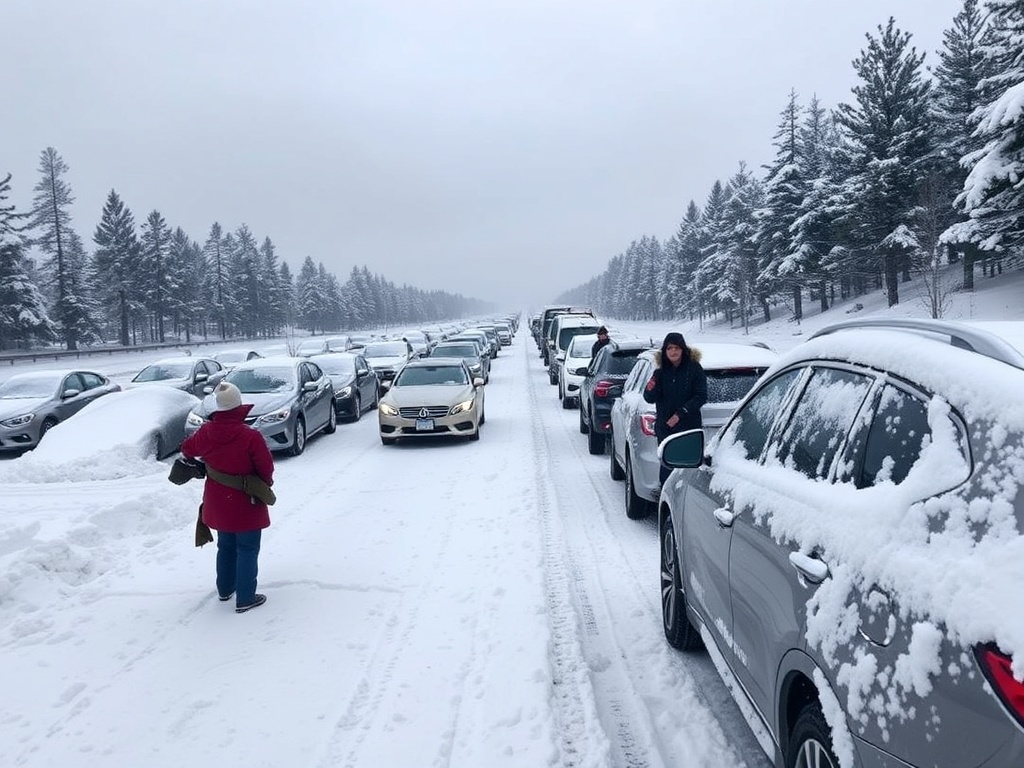
Flagstaff Snowstorm Strands Tourists on I-17 as Northern Arizona Braces for Whiteout Conditions

Thousands of tourists were stranded Saturday on Interstate 17 and State Route 89A near Flagstaff, Arizona, after severe winter weather forced highway closures across northern Arizona. Officials said snow squalls and slick conditions caused whiteout visibility, prompting the Arizona Department of Transportation to close multiple highways and advise travelers to delay trips.
Interstate 17 northbound and State Route 89A near Flagstaff remained closed through much of Saturday due to severe winter weather, according to the Arizona Department of Transportation (ADOT). Officials reported that snow squalls and slick road conditions caused whiteout and near-whiteout visibility, prompting the closures and advisories for drivers to delay travel if possible. The National Weather Service issued warnings for snow squalls along I-17 between the Verde Valley and Flagstaff corridor, citing hazardous driving conditions.
One family with medical conditions was stuck in traffic for 12 hours, and another driver reported being stranded for 15 hours with an impending flight from Las Vegas.
ADOT confirmed that I-17 north of State Route 179, the Sedona cutoff, was closed near the Stoneman Lake area as winter weather made travel unsafe. State Route 89A was also closed north of Sedona, where slick conditions on the Oak Creek Canyon switchbacks rendered the roadway impassable. These closures affected thousands of motorists attempting to travel through northern Arizona’s High Country, which experienced the most severe impacts from the storm.
Despite the closures, I-40 reopened early Sunday morning at 8:50 a.m., although officials noted that extreme traffic delays persisted. Robyn Dabney and her friends were among those stranded on I-40 for approximately five hours Saturday, while other drivers reported longer delays. ADOT provided real-time updates on highway status throughout the storm event to assist stranded travelers.
The Arizona Department of Transportation emphasized that roads remained slick and hazardous during the storm, urging drivers to postpone travel whenever possible. “Roads are slick, and drivers should delay travel if at all possible,” ADOT officials said in a statement. The department also confirmed that while I-17 northbound and State Route 89A reopened early Sunday, multiple other highways across northern Arizona’s High Country remained closed due to persistent winter weather conditions.
Snow squalls created dangerous visibility conditions across the region, with the National Weather Service warning of whiteout and near-whiteout conditions on key corridors. These weather phenomena significantly reduced visibility, complicating driving and contributing to the decision to close several highways. ADOT’s closures aimed to prevent vehicle accidents and further stranding of motorists in remote areas.
The winter storm that hit northern Arizona on Saturday was part of a series of weather events affecting the region over several days. Flagstaff experienced a snow day earlier in the week on Wednesday, followed by another round of winter weather moving into the state on Thursday. These successive storms led to multiple highway closures and hazardous conditions that extended into the weekend.
The High Country region, including areas around Flagstaff, the Verde Valley, and Sedona, bore the brunt of the storm’s impact. The Oak Creek Canyon switchbacks near Sedona, known for their winding and steep terrain, became especially treacherous due to ice and snow accumulation. The Sedona area, marked by State Route 179, served as a reference point for the northern boundary of several closures on I-17 and SR 89A.
Authorities continued to monitor weather and road conditions as the storm progressed. ADOT officials maintained that the closures and travel advisories were necessary to ensure public safety amid ongoing snow squalls and slick surfaces. They provided frequent updates to the public and worked to reopen roadways as conditions improved.
The reopening of I-40 early Sunday morning marked a significant step toward restoring normal traffic flow, although the department cautioned that delays would continue due to the backlog of stranded vehicles. Officials urged drivers to remain cautious and to check for the latest road conditions before traveling in northern Arizona.
This winter storm underscored the challenges of managing transportation infrastructure during severe weather in mountainous and high-elevation areas. ADOT’s response included coordinated closures, advisories, and real-time communications to mitigate risks and assist stranded motorists. The department’s efforts were part of broader state and local government responses to the multiple winter weather events affecting northern Arizona over the past week.


Comments are closed.