

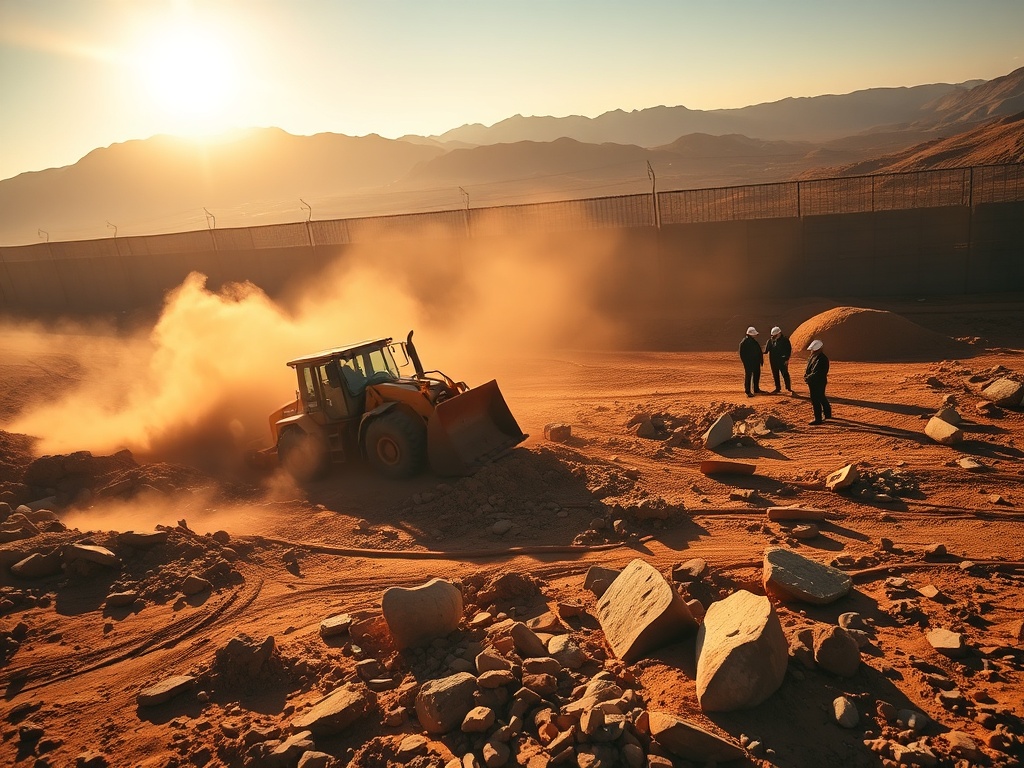

Construction crews inadvertently damaged 60 to 70 feet of the 1,000-year-old Las Playas Intaglio archaeological site in Arizona’s Cabeza Prieta National Wildlife Refuge on April 23, U.S. Customs and Border Protection officials said. The damage occurred during border wall construction using heavy machinery, prompting CBP Commissioner Rodney Scott to engage with tribal leaders and secure the remaining portion of the site for protection.
The intaglio, a large geoglyph shaped like a fish, is etched into the desert pavement of the Cabeza Prieta National Wildlife Refuge in Arizona’s Sonoran Desert. CBP spokespersons confirmed the damage occurred on April 23 during border wall construction involving heavy machinery operated by contractors. The agency described the disturbance as inadvertent and said the remaining portion of the site has been secured to prevent further harm.
The damaged portion of the Las Playas Intaglio measures between 60 and 70 feet of the site’s total length of approximately 272 feet, according to U.S. Customs and Border Protection (CBP) officials.
CBP Commissioner Rodney Scott has initiated direct engagement with tribal leaders, including representatives of the Tohono O’odham Nation, whose ancestral lands border the refuge to the east. Tribal opposition to border wall construction in the area has been documented in U.S. Supreme Court filings from the first Trump administration, which previously helped prevent wall construction on the O’odham reservation. The Tohono O’odham Nation considers the intaglio a sacred site linked to their ancestors, according to tribal sources and archaeologists familiar with the area.
Archaeologist Rick Martynec, who discovered the Las Playas Intaglio in 2002 and has studied it for more than 20 years, expressed concerns about the site’s vulnerability amid the accelerated border wall project. Martynec described the intaglio as a cultural treasure comparable to the Nazca lines in Peru, noting its significance as a Native American creation formed by scraping away desert stones to reveal lighter soil beneath. Another archaeologist, David Wright, who has studied intaglios in the region for the past decade, also voiced apprehensions about the impact of the so-called “Smart Wall” construction on these ancient designs.
The border wall expansion, funded by $46 billion approved in the “One Big Beautiful Bill” signed in July last year, includes secondary barrier reinforcements across California, Arizona, and New Mexico. Construction reportedly proceeds at a rate of about three miles per week, according to reports from the Washington Post and Anadolu Agency. Those reports also indicate that environmental and indigenous protections have been bypassed in the process. The proximity of the Las Playas Intaglio to existing border infrastructure has been known and documented for years, with Martynec’s surveys since 2002 recording the site’s location and significance.
The damage to the intaglio was first reported by the Washington Post, which published satellite images showing fresh disturbances in a remote corner of the Cabeza Prieta refuge. Hyperallergic obtained confirmation from CBP regarding the incident and provided context about tribal concerns. The Daily Beast and The Intercept have covered the broader implications of the border wall expansion and its effects on cultural and environmental sites, citing statements from archaeologists and indigenous leaders.
During the Trump administration’s first term, the Tohono O’odham Nation successfully prevented border wall construction across its reservation, including efforts to protect a nearby sacred burial site. The Las Playas Intaglio’s cultural and historical importance has been recognized in official records and legal documents, underscoring the longstanding awareness of the site among federal agencies and tribal authorities.
Following the April 23 incident, CBP officials have pledged to protect the remaining intact portions of the intaglio in place while consultations continue with tribal leadership to determine appropriate next steps. The agency has not indicated any intent to halt construction in the broader area but has emphasized efforts to mitigate further damage to the archaeological site.


Comments are closed.