

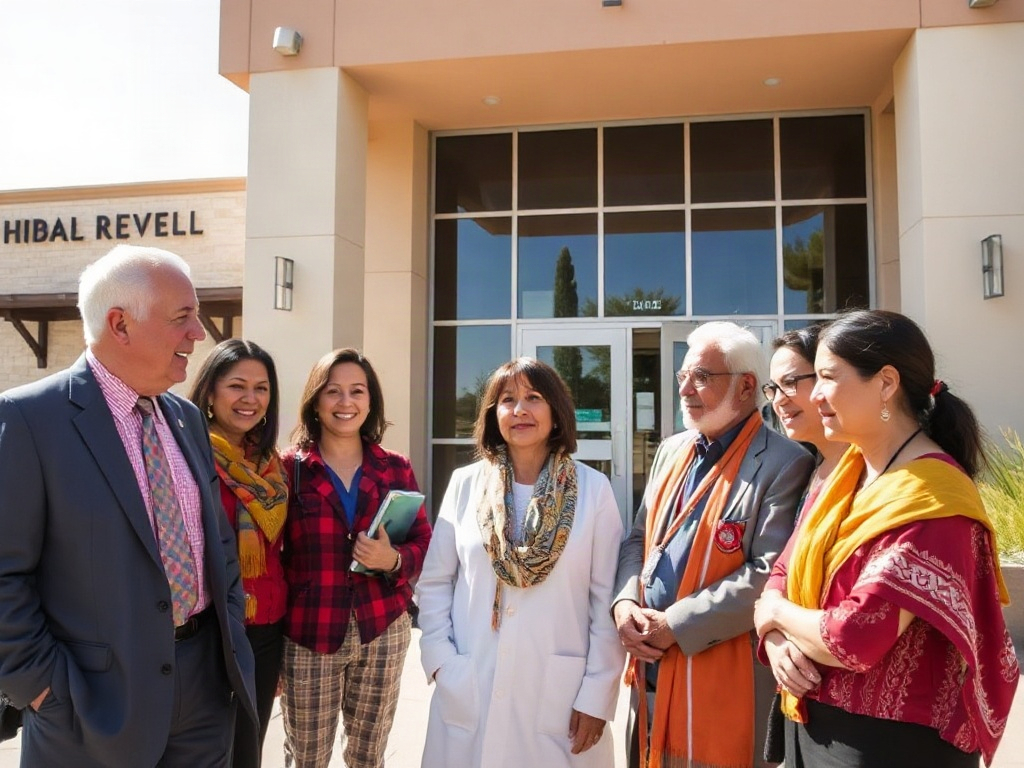
University of Arizona, Gila River Health Care partner to establish first medical school branch on tribal land

The University of Arizona and Gila River Health Care announced on August 18, 2026, a partnership to establish the nation’s first MD-granting medical school branch on sovereign tribal land in Sacaton, Arizona. According to university officials, the new regional branch aims to train physicians within a Tribal healthcare system to improve care for Tribal, rural, and medically underserved communities.
The new branch, officially named the University of Arizona College of Medicine – Phoenix Regional Medical Branch in Sacaton, will be part of the College of Medicine – Phoenix’s three-year MD-granting Primary Care Accelerated Program, university officials said. The program is designed to train students within a Tribal healthcare system and aims to address physician shortages by preparing graduates for primary care roles in Tribal, rural, and medically underserved communities, according to university materials.
The partnership between the University of Arizona, Gila River Health Care, and the Gila River Indian Community represents a first-of-its-kind collaboration, according to university communications.
Students admitted to the program, which will begin its first class in July 2027, will number 10 annually, with a total enrollment of 30 students across the three-year cycle. The curriculum is structured so that students spend the first 18 months in Phoenix receiving foundational medical education and then complete the final 18 months of clinical training in Sacaton, Arizona, located within the Gila River Indian Community. This community-based approach to medical education is intended to provide immersive clinical experience in a setting that reflects the healthcare needs of Tribal populations, university officials said.
It is the nation’s first MD-granting medical school branch situated on the lands of a sovereign Tribal Nation. The announcement was made jointly on August 18, 2026, at an event held at Gila River Resorts & Casinos – Wild Horse Pass in Chandler, Arizona, university records show.
Funding for the branch includes a commitment of more than $25 million from Gila River Health Care through 2034, which will support faculty positions, student scholarships, and educational infrastructure. University sources confirmed that all students admitted to the program will receive full tuition scholarships funded by Gila River Health Care, part of an effort to remove financial barriers for prospective medical students. The long-term funding commitment is intended to sustain the branch’s operations and growth over multiple years.
Leadership from all three partners emphasized the significance of the initiative. University of Arizona President Suresh Garimella said the partnership is intended to train physicians within the Gila River Health Care system to better serve Tribal and underserved populations. Dr. Fredric Wondisford, dean of the College of Medicine – Phoenix, noted that this is the first campus on tribal land of an allopathic (MD) medical school in the United States. Stephen Roe Lewis, governor of the Gila River Indian Community, stated that training physicians on Indian land allows them to be exposed to the community’s way of life and healthcare needs, according to university communications.
Gila River Health Care, the tribally operated healthcare system for the Gila River Indian Community, will serve as the clinical education site for the program. The community’s capital, Sacaton, Arizona, will host the branch, which university officials said will provide a new model for medical education focused on community-based training rather than traditional academic medical centers. The collaboration is framed as a historic partnership among a sovereign Tribal Nation, a public research university, and a tribally operated healthcare system.
Media coverage from outlets including University of Arizona News, Phoenix Med, ABC15, AZFamily, and Arizona Central highlighted the program’s potential to address healthcare shortages in Native American, rural, and underserved communities. Reports noted the program’s goal to encourage graduates to practice medicine locally after completing residency training.
The branch’s launch marks a new chapter in medical education and workforce development for Tribal healthcare systems, with the first cohort of students expected to begin classes in July 2027. The partnership and program development are ongoing, with further details on curriculum and faculty appointments anticipated as the launch date approaches.


Comments are closed.