

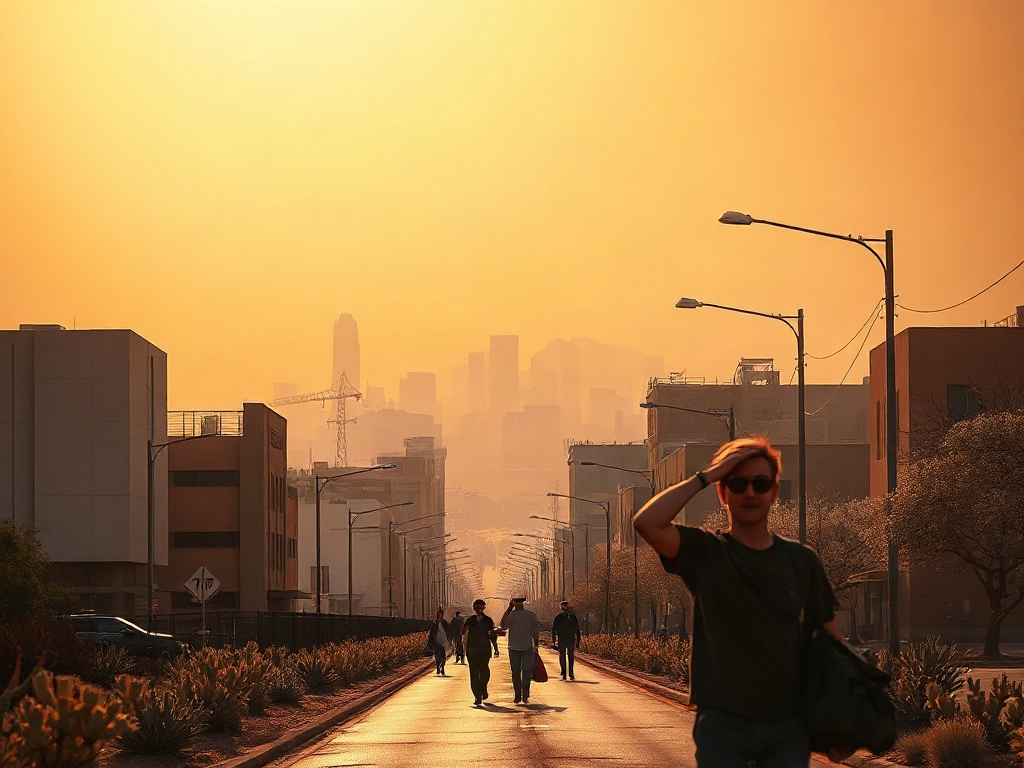

Phoenix experienced two rare Category 5 dust storms on Aug. 3 and Aug. 6, marking the first back-to-back events of such intensity in at least 16 years, according to Arizona State University’s Phoenix Dust Storm Scale. The storms, accompanied by gusts up to 45 mph, reduced visibility and caused unhealthy air quality levels, prompting an air quality alert from the Arizona Department of Environmental Quality.
The two Category 5 dust storms in early August brought strong winds and reduced visibility across the Phoenix metropolitan area and surrounding regions. The first storm moved through Pinal County and metro Phoenix around 10 p.m. on Aug. 3, producing wind gusts near 50 mph and sending dust across the Valley late at night, according to local reports and Arizona State University researchers. The second storm arrived early on Aug. 6, pushing dust into the Valley with gusts of 40 to 45 mph and reducing visibility to about one mile in some locations, the National Weather Service (NWS) office in Phoenix said.
The Aug. 3 storm reached a peak particulate matter concentration of 6,136 micrograms per cubic meter in St. Johns on the Gila River Indian Community, while the Aug. 6 storm peaked at 5,841 micrograms per cubic meter in Chandler, according to Arizona Daily Star data.
These events marked the fifth and sixth recorded Category 5 dust storms on the ASU Phoenix Dust Storm Scale in the past 16 years, making them the first back-to-back occurrences of such intensity during that period, according to AZFamily and Arizona Daily Star reporting.
The dust storms caused significant disruptions to daily life and travel. Visibility dropped sharply, creating hazardous driving conditions across the Valley, local news outlets reported. The haze and airborne dust lingered for days, prompting the Arizona Department of Environmental Quality (ADEQ) to issue an air quality alert for Aug. 6. Air quality measurements in Phoenix reached 125 on the Air Quality Index, classified by AccuWeather as unhealthy, particularly for sensitive groups, and the poor conditions were expected to persist through Aug. 7, according to ADEQ and NWS meteorologist Matt Salerno.
The National Weather Service attributed the dust and haze to the storms and noted that the lingering particulate matter continued to affect visibility and travel conditions. The haze and cloud cover also moderated daytime temperatures slightly but did not prevent the region from experiencing prolonged extreme heat.
The heat risk remained elevated following the dust storms. The NWS Phoenix office reported that a strong high-pressure system over the Southwest would keep temperatures 5 to 10 degrees Fahrenheit above normal through the following week. An Extreme Heat Warning was in effect through Friday, Aug. 28, covering the lower deserts of Arizona and southeast California, as well as the San Carlos area in southern Gila County. Afternoon highs across lower-desert communities were forecast to remain several degrees above daily normals, with overnight lows frequently in the 80s and low 90s, limiting nighttime relief.
Local media reported that First Alert Days continued through Aug. 7, with highs near 111 degrees and heat alerts in place. On Aug. 6, Phoenix temperatures were expected to reach about 108 degrees, rising toward 112 degrees by Saturday, according to AZFamily and azcentral coverage. The National Weather Service’s Phoenix office noted a morning low of 92 degrees at Sky Harbor Airport on Aug. 6, which was 8 degrees above the normal low for that date.
Arizona State University researchers and local meteorologists emphasized the unusual intensity of the early August dust storms. Both events were categorized as Category 5 on ASU’s Phoenix Dust Storm Scale, with wind speeds estimated near 50 mph. The storms’ particulate matter concentrations were among the highest recorded in recent years, underscoring the severity of the events.
The persistence of the high-pressure system and the resulting extreme heat is expected to continue through late August, maintaining above-normal temperatures across the Phoenix area and lower desert regions. The combination of intense dust storms and prolonged heat presents ongoing challenges for air quality and public health, according to state and federal weather and environmental officials.


Comments are closed.