

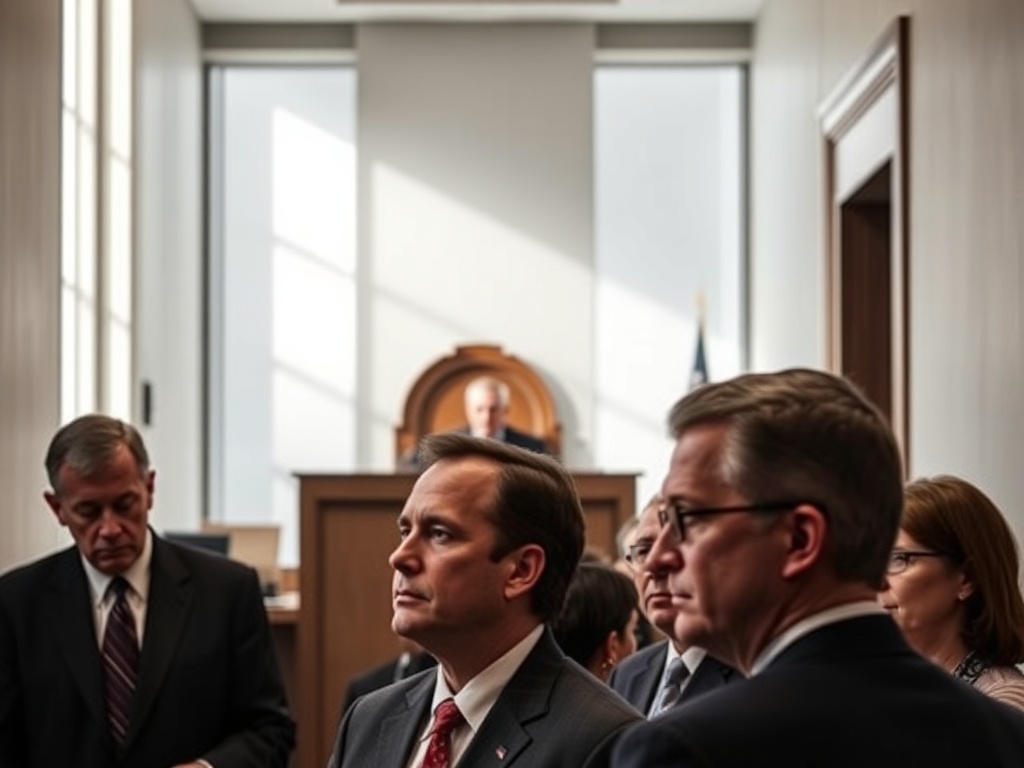

Maricopa County Superior Court Judge Roger Brodman ruled Thursday against a legal challenge brought by Democrats against the Arizona Independent Redistricting Commission. The court granted summary judgment dismissing claims that the Commission violated Arizona’s Open Meeting Law by conducting secret deliberations, finding the Commission’s actions complied with state law, according to court documents.
Judge Roger Brodman issued the ruling Thursday morning in a case stemming from Leach v. Arizona Independent Redistricting Commission, granting summary judgment in favor of the Commission and dismissing all claims that it violated Arizona’s Open Meeting Law, according to court documents and a press release from the Commission dated March 16, 2017. The plaintiffs alleged that the Commission conducted secret deliberations and made decisions without proper public access, which they argued was a violation of state law. However, Brodman found that the Commission’s actions complied with the requirements of Arizona’s Open Meeting Law, rejecting the challenge brought by Democrats against the Commission’s redistricting processes.
Judge Roger Brodman issued the ruling Thursday morning in a case stemming from Leach v. Arizona Independent Redistricting Commission, granting summary judgment in favor of the Commission and dismissing all claims that it violated Arizona’s Open Meeting Law.
The legal challenge centered on accusations that the Arizona Independent Redistricting Commission (AIRC) held closed-door meetings and made decisions without sufficient transparency. Plaintiffs in the case included individuals such as Lisa T. Hauser, Mary R. O’Grady, and Michele Lee Forney, who contended that the Commission’s redistricting plan development lacked openness and that the Commission failed to provide adequate resources under Article 4, Part 2, Section 1(20) of the Arizona Constitution, according to court filings. The Hauser case, related to the main challenge, also questioned the formation and operations of the Commission, asserting that nominee lists for the Commission’s appointments by the Commission on Appellate Court Appointments (CACA) were improperly handled.
Judge Brodman’s ruling addressed these allegations by concluding that the Commission did not violate the Open Meeting Law through secretive deliberations. The court described the judgment as an “under advisement ruling” in related filings but ultimately determined that the AIRC’s decision-making process was lawful and transparent as required by state statute. The ruling fully granted summary judgment to the Commission and its commissioners, who were named defendants in the case, rejecting all claims brought by the plaintiffs, according to court records.
The challenge to the Commission’s redistricting efforts arose amid ongoing scrutiny of the state’s independent redistricting process, which was established to draw legislative and congressional district boundaries fairly and independently of the state legislature. The state of Arizona, including Attorney General Thomas C. Horne, was involved in appeals related to the case, defending the Commission’s actions and the validity of the redistricting plan. Appeals referenced in court documents indicate that the superior court’s judgment was later contested, reflecting continued legal disputes over the Commission’s authority and procedures.
The ruling came after several years of litigation, including motions to dismiss and related cases such as Hauser v. AIRC (case CV2012-007344), which had been under advisement for some time. Additional motions and orders, such as a motion to dismiss dated November 30, 2020, show the protracted nature of the legal battles surrounding the Commission’s work. The Commission’s press release emphasized the court’s decision as a victory for the independent redistricting process, affirming the legality of its operations under Arizona law.
The Arizona Independent Redistricting Commission was created to ensure fair and transparent redistricting in the state, and its work has been subject to legal challenges since its inception. The court’s ruling upholding the Commission’s compliance with the Open Meeting Law reinforces the legal framework supporting the Commission’s authority. However, related appeals and ongoing litigation suggest that challenges to the Commission’s procedures and decisions may continue in the state’s courts.


Comments are closed.